2026 Best Top Rated Dog Chew Toys for Happy Pets?
In the world of pet care, choosing the right toys for your dog is essential. According to a recent report by the American Pet Products Association, about 70% of pet owners consider chew toys a vital part of their dog's health regimen. This highlights the growing importance of finding "Top Rated Dog Chew Toys" that keep pets happy and healthy.
Dr. Sarah Thompson, a renowned animal behaviorist, emphasizes the impact of chew toys on a dog’s mental and physical well-being. She states, "Engaging toys stimulate dogs, reduce anxiety, and promote better behavior." With this in mind, picking the right chew toy is not just a matter of preference.
Many options can be overwhelming. Some toys promise durability and safety but fall short in effectiveness. Pet owners should consider their dog’s chewing habits and preferences. Research shows that dogs who engage with high-quality chew toys display lower stress levels. As you explore the 2026 best top rated dog chew toys, keep these insights in mind for the happiest, healthiest pets.

Overview of Dog Chew Toys: Benefits for Pets and Owners
Dog chew toys play a vital role in the lives of our furry friends. They provide mental stimulation, preventing boredom, and allow dogs to engage in natural chewing behavior. This activity is essential for dental health, as it helps reduce plaque and tartar buildup. A simple rubber toy can keep your pet occupied for hours.
Dogs are instinctual chewers, and the right toy can satisfy that need. Chewing reduces anxiety and stress, making dogs calmer. Many owners notice improved behavior after incorporating suitable chew toys into their routines. However, it's important to supervise your pet while chewing to prevent swallowing larger pieces, which could lead to choking hazards.
Choosing the best toy means understanding your dog’s preferences. Some dogs prefer soft textures, while others enjoy durability. Regularly checking the condition of toys is crucial. A damaged toy may pose safety risks. This can be a learning experience for both pet and owner, as preferences evolve. Chew toys are not just for entertainment; they're tools for happy, healthy pets.
Types of Dog Chew Toys: Materials and Designs Explained
When it comes to choosing dog chew toys, understanding the material and design is crucial. Common materials include rubber, nylon, and rawhide. Rubber toys are durable and can withstand aggressive chewing. They also provide some bounce, making them fun for dogs. However, not all rubber toys are equal; some can be too hard and risk breaking teeth.
Nylon is another popular choice. It's long-lasting, but some dogs may not find it as enjoyable. Rawhide, while tasty, can pose choking hazards. Always supervise your pet with such toys. Selecting the right material can significantly affect your dog's chewing experience.
**Tips:** Opt for toys that suit your dog's chewing habits. Observe how your pet interacts with different textures. Some dogs love soft, plush toys, while others prefer hard surfaces. Let your dog try various toys to find the perfect match. Remember, regular inspection of toys is vital. Discard anything broken or unsafe to keep your pet happy and healthy.
2026 Best Top Rated Dog Chew Toys for Happy Pets
| Type of Chew Toy |
Material |
Durability |
Design Features |
Recommended For |
| Rubber Chew Toy |
Natural Rubber |
High |
Bouncy, Textured |
Large Breeds |
| Nylon Chew Toy |
Nylon |
Very High |
Bone-Shaped, Flavored |
Heavy Chewers |
| Stuffed Animal |
Fabric, Polyester Fill |
Medium |
Squeaky, Plush |
Small to Medium Breeds |
| Dental Chews |
Edible, Natural Ingredients |
Low to Medium |
Dental Health Benefits |
All Breeds |
| Bone Chew |
Natural Organic Bone |
Medium to High |
Natural Flavor, Hard |
Large Breeds |
Factors to Consider When Choosing Chew Toys for Your Dog
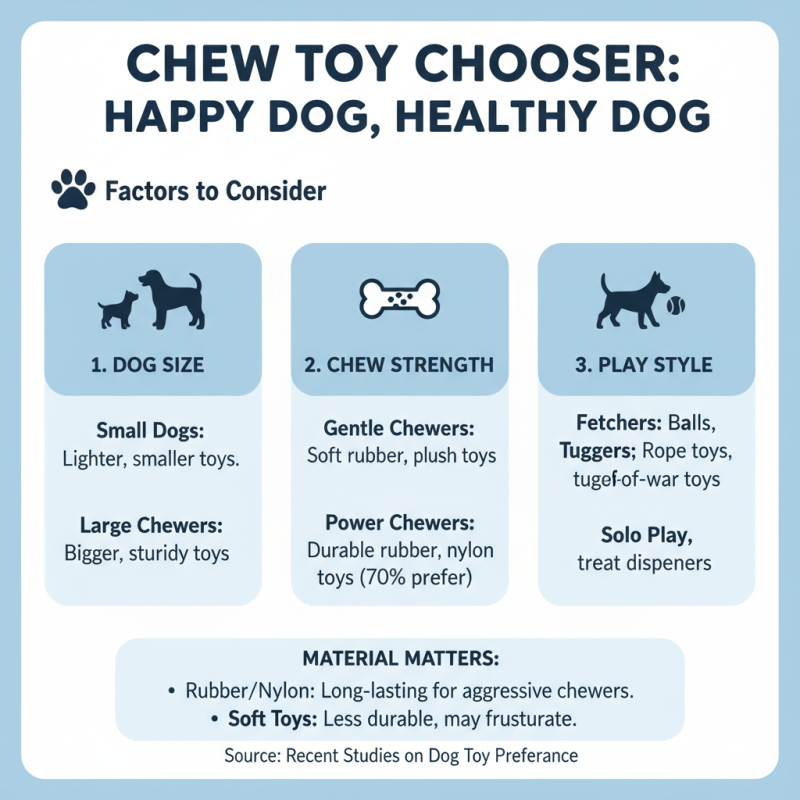
Choosing the right chew toy for your dog is essential for their happiness and health. Recent studies show that about 70% of dog owners report their pets prefer durable toys. Not all toys are created equal. Consider your dog's size, chew strength, and play style. A small dog may struggle with heavy-duty toys designed for aggressive chewers. Selecting the appropriate material is crucial. Rubber and nylon toys can withstand heavy chewing. However, some softer toys may not last long, leading to frustration for your pet.
Age also plays a critical role in toy selection. Puppies have different needs compared to senior dogs. According to the American Kennel Club, dental health is another factor to consider. Chew toys can help clean teeth and maintain oral hygiene. Toys that are too hard might damage young teeth or exacerbate dental issues in older dogs. Likewise, be cautious with toys that contain small parts. These pose a choking hazard, and ingestion can lead to severe health problems.
Finally, monitoring your dog's interaction with their toys is vital. Even high-rated toys can wear down over time. Regular check-ups help ensure your dog is safe. It’s important to replace worn or damaged toys promptly. Each dog is unique, and their preferences may change. Keeping an eye on their behavior will lead to a better, more enjoyable playtime experience.
Top Rated Dog Chew Toys of 2026: Features and Customer Reviews
When it comes to dog chew toys, choosing the right one is crucial for your pet's happiness. The best-rated toys of 2026 emphasize durability and safety. Many dog owners report that strong materials help keep their pets engaged for longer. Look for non-toxic options that withstand heavy chewing. Reviews often highlight toys with different textures. These stimulate your dog's senses and encourage play.
Tips for choosing the perfect chew toy: pay attention to your dog's size and chewing habits. Large breeds may need sturdier toys, while smaller dogs could enjoy softer options. Always supervise your pet during play. This helps prevent accidental swallowing of any toy parts. Some toys even come with added features like squeakers or treat compartments, making playtime more exciting.
Consider your dog's preferences as well. Some dogs love to tug or fetch, while others enjoy solo chewing. A toy may seem appealing, but if your dog doesn’t engage, it’s worth trying something else. Keep an open mind and experiment with different styles. What works for one dog may not work for another. Stay patient and attentive to their needs for the best results.
Safety Tips for Using Dog Chew Toys: Keeping Your Pet Happy and Healthy
When selecting dog chew toys, safety is paramount. According to the American Kennel Club, 60% of dog injuries stem from inappropriate toys. Selecting the right materials is crucial. Durability can prevent ingestion of harmful pieces. Opt for non-toxic rubber or well-made nylon that withstands strong bites. Regularly inspect toys for signs of wear, as frayed edges can pose choking hazards.
Supervision during playtime is vital. This ensures your pet does not ingest parts. Also, setting time limits can prevent overstimulation and promote healthy chewing habits. A study from the Veterinary Medical Association suggested that 70% of dog behavioral issues are connected to boredom. Engaging toys can improve mental health and reduce anxiety. Always choose items suited to your dog's size and chewing strength.
Consider the implications of chewed-based toys. They may harbor bacteria if not cleaned regularly. A simple wash can prevent unwanted germs. Note that keeping toys away from food and water bowls reduces contamination. It's also essential to understand that every dog is unique. What works for one might not for another. It’s a journey of discovery.