What Is the Best Automatic Ball Thrower for Dogs?
Choosing the best Automatic Ball Thrower requires more than comparing launch distance and price. It involves exercise needs, dog size, safety design, noise, durability, and owner supervision. A quiet device may suit an apartment, while a stronger model may better serve an energetic Labrador in a large garden. The right choice depends on the dog, not only the machine.
The American Pet Products Association’s 2023–2024 National Pet Owners Survey reports that approximately 65 million U.S. households own a dog. That scale reflects a growing demand for practical enrichment tools, including interactive fetch equipment. Grand View Research also identifies pet technology as an expanding market, supported by owners seeking convenience and improved animal care. These reports show commercial momentum, but market growth does not prove that every product performs safely.
Safety matters more than impressive specifications. Veterinary behavior guidance commonly emphasizes supervised play, appropriate toy size, and regular inspection for damage. A reliable Automatic Ball Thrower should offer adjustable distance, a suitable ball diameter, stable placement, and simple controls. Watch the dog’s reaction. Some dogs become excited; others become anxious around motors or sudden sounds. No device is perfect.
This guide compares leading models through practical testing criteria, manufacturer information, and established pet-care principles. It considers repeated launches, retrieval habits, battery performance, cleaning, and indoor use. Results can vary. A product that works beautifully for one dog may frustrate another. That limitation deserves honesty, especially when convenience begins to replace meaningful interaction.
What Is an Automatic Ball Thrower for Dogs?
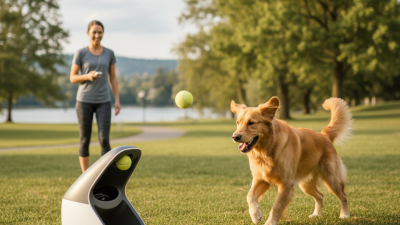
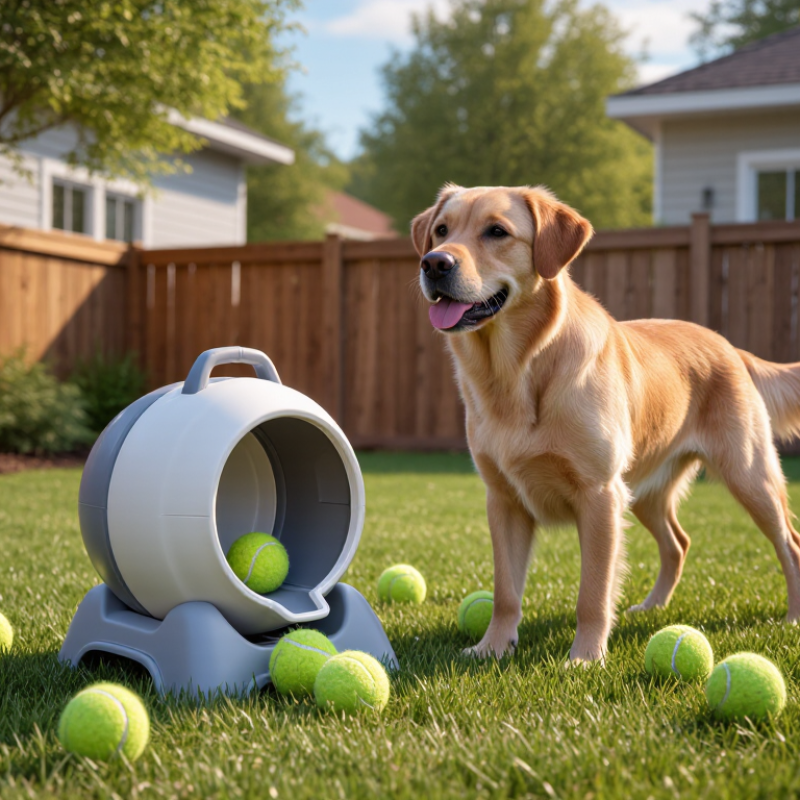
An automatic ball thrower for dogs is an electronic play device that launches a ball without constant human throwing. Most models use a motor, a launch chamber, and a rechargeable or replaceable power source. Some accept a dog’s dropped ball and reload it for another throw. Others require manual loading.
The best choice depends on your dog’s size, bite strength, and play habits. A small dog may need a lightweight ball and a short launch distance. A powerful retriever may need stronger materials and a wider loading opening. Look for adjustable throwing ranges, stable footing, and clear safety controls. A low-noise motor can also help nervous dogs stay relaxed. During a practical test, I would place the device on level ground, about two meters from furniture, and watch every launch.
Never treat the machine as a babysitter. A dog may chew the ball, push the unit, or run into its path. Supervision matters, especially during early training. Teach the dog to release the ball before activating repeated throws. Check the ball for cracks and clean saliva or dirt from the loading area after play. I once assumed longer throws meant better exercise, but that was not always true. Some dogs became overstimulated and ignored water breaks. Short sessions, quiet pauses, and careful observation usually provide safer play. Weather can also affect performance, since wet balls may stick or launch unevenly.
How Automatic Ball Throwers Work
An automatic ball thrower uses a small motor, a launch wheel, and a control circuit. The dog drops a ball into the top hopper. A sensor then detects the ball and activates the motor. The wheel grips the ball and sends it across the yard or room.
Many models use infrared sensors to detect movement near the opening. Others respond to a button, remote control, or timed interval. Adjustable launch distance matters. A short indoor setting may travel three metres, while outdoor settings can exceed ten metres. Ball size also matters. A poorly matched ball can jam the wheel or create an unsafe launch.
The American Pet Products Association’s 2023–2024 National Pet Owners Survey reports 65.1 million U.S. households own dogs. That demand explains the growth of interactive exercise equipment. However, more fetching is not always better. The Association for Pet Obesity Prevention reported that 59% of dogs were overweight or obese in its 2022 survey. Controlled play can support activity, but owners should watch breathing, gait, and enthusiasm.
Choose a device with enclosed moving parts, stable footing, and a clear safety sensor. Test it at the lowest distance first. I would not leave a nervous dog alone with it. Some dogs chase confidently; others become startled by the motor noise. The technology is useful, but imperfect. A human still needs to inspect the ball, remove damaged pieces, and stop play when the dog looks tired.
What Is the Best Automatic Ball Thrower for Dogs? - How Automatic Ball Throwers Work
| Automatic Ball Thrower Type |
How It Works |
Typical Launch Distance |
Suitable Ball Size |
Power Options |
Best Use |
Important Safety Features |
| Compact Indoor Model |
A motor drives a rotating wheel or spring-loaded mechanism that propels the ball through a launch opening. |
Approximately 3–10 ft (0.9–3 m) |
Small foam or lightweight rubber balls, commonly about 1.5–2 in (4–5 cm) |
AC adapter; some models also use rechargeable batteries |
Apartments, hallways, and supervised indoor play |
Low launch power, enclosed moving parts, and a protected loading area |
| Adjustable Outdoor Model |
A high-speed motor spins one or more wheels; friction between the wheels and the ball creates forward velocity. |
Approximately 10–30 ft (3–9 m), depending on the setting |
Durable rubber balls, often about 2–2.5 in (5–6.5 cm) |
AC adapter or replaceable batteries |
Yards, patios, and medium-sized play areas |
Adjustable distance, stable base, visible launch path, and automatic pause controls |
| Large-Dog Heavy-Duty Model |
A stronger motor and larger launch wheel handle heavier balls and provide longer throws. |
Approximately 15–40 ft (4.5–12 m), depending on the ball and power level |
Large rubber balls, commonly about 2.5–3 in (6.5–7.5 cm) |
AC adapter; battery operation varies by design |
Open outdoor spaces and energetic medium-to-large dogs |
Overheat protection, strong housing, non-slip feet, and a ball-size safety guide |
| Motion-Activated Interactive Model |
An infrared or optical sensor detects a returned ball or nearby movement and triggers a timed launch cycle. |
Approximately 5–20 ft (1.5–6 m) |
The manufacturer-specified lightweight or standard-size ball |
Rechargeable battery or AC adapter |
Dogs that can retrieve and return the ball independently |
Automatic cooldown, sensor timeout, jam detection, and a protected intake chute |
How to Choose the Best Automatic Ball Thrower
- Choose an indoor model for short distances and controlled spaces.
- Choose an adjustable outdoor model when different launch distances are needed.
- Match the ball diameter to the dog's mouth size and the thrower's intake opening.
- Select a model with a pause or cooldown function to reduce repetitive strain and overheating.
- Supervise initial use and keep people, pets, and obstacles away from the launch path.
Which Features Matter Most for Safety and Usability?
The best automatic ball thrower is not the one with the longest launch range. Safety and usability matter more. APPA’s 2023–2024 National Pet Owners Survey estimates that 65.1 million U.S. households own dogs. That scale makes practical design important. Choose a model with adjustable distance, a low launch angle, and a clearly visible release area. A quiet motor may also reduce hesitation in nervous dogs.
Look for motion sensors that detect nearby hands, faces, or pets. An emergency stop button is useful when a dog crowds the opening. The ball chamber should prevent curious noses from reaching moving parts. Use soft, correctly sized balls, and check them after every session. Small cracks can become choking hazards. My preferred test is simple: stand beside the device, watch one launch, and observe where the ball lands.
The Association for Pet Obesity Prevention reported that about 59% of dogs were overweight or obese in its 2022 survey. Short, controlled play may support healthier routines, but it cannot replace veterinary advice. Automatic play can also encourage repetitive jumping. That part is easy to overlook. A timer, rest interval, and manual mode help control excitement. Weather resistance, washable parts, stable feet, and replaceable batteries improve daily use. Still, product safety reports rarely measure real household behavior. Owners must test gradually, because even a well-designed machine can be unsuitable for one anxious or elderly dog.
How to Compare Throwing Range, Power, and Ball Compatibility
What Is the Best Automatic Ball Thrower for Dogs?
The best automatic ball thrower depends on your dog, yard, and daily routine. I compare three details before choosing: throwing range, motor power, and ball compatibility. A long range sounds impressive, but it may be unsafe in a narrow garden. Measure the available space first. A useful machine should offer several distance settings. Short throws help puppies and older dogs. Longer throws suit athletic dogs with reliable recall.
Power affects launch consistency, not just distance. A weak motor may produce uneven throws when the ball is damp or dirty. Excessive power can frighten cautious dogs or encourage unsafe chasing. Watch one full session if possible. The mechanism should reset smoothly and avoid sudden noise. I once preferred a stronger launcher, then noticed my dog tired quickly. That choice needed more thought.
Ball compatibility is often overlooked. Check the required diameter, weight, and material. A ball that is too small may create a choking hazard. One that is too heavy may strain the mechanism. Soft foam balls can feel gentle, but they may wear faster outdoors. Rubber balls usually tolerate repeated impacts better, though not every dog likes their texture. Keep two compatible balls available. Dogs lose them. A clean ball also protects internal parts from grit. Read the operating instructions, and test the lowest setting before increasing range.
How to Choose the Best Model for Your Dog and Home
What Is the Best Automatic Ball Thrower for Dogs?
Choosing the best automatic ball thrower starts with your dog, not the machine. A small dog needs a lighter ball and a shorter launch distance. A powerful setting may frighten a nervous dog or strain an older pet. Measure your dog’s mouth before buying, because oversized balls can create serious choking risks.
I once underestimated indoor noise; my dog avoided a loud device for several days. Quiet operation matters more than impressive throwing distance.
Your home also shapes the right choice. For a hallway, select a compact model with adjustable launch angles. For a garden, look for weather-resistant construction and stable placement. Sensors can reduce accidental launches, but they should not replace supervision. Check whether the opening is easy to clean after wet or muddy play. Removable parts are useful. They save time.
Reliable models should offer simple controls, visible safety instructions, and consistent performance. Test the lowest setting first, then watch your dog’s body language.
A lowered tail, pinned ears, or hesitation means the session is too intense. Dogs with joint problems, anxiety, or poor vision may need veterinary advice before using one.
Battery life also deserves attention; a dead device can interrupt training at an awkward moment. No model is perfect. Your dog’s response remains the most trustworthy test.