Leave Your Message
For wholesale buyers, Cat Chew Toys sit at the intersection of enrichment, material safety, and repeat-purchase potential. The American Pet Products Association’s 2023–2024 National Pet Owners Survey estimated that 46.5 million U.S. households owned cats. Its 2024 State of the Industry report projected U.S. pet-industry spending at $150.6 billion. These figures show a large pet market, not chew-toy sales specifically. That distinction matters.
Cats vary. One may gnaw a soft textile toy; another may ignore it and chase a feather. Feline behavior researcher Dr. Mikel Delgado has emphasized the value of play that engages cats’ natural hunting behaviors. For chew-toy buyers, that points toward products combining safe textures with opportunities to stalk, bite, and capture. A plush mouse, a resilient rubber shape, and a textured fabric toy can offer different experiences. Still, no design suits every cat.
This guide compares ten options through a wholesale lens: construction, likely appeal, durability, and shelf-ready practicality. Details matter. Stitching can loosen. Materials can feel different in a buyer’s hand than they appear in a catalog. The APPA’s broad spending figures cannot predict which toy will sell best, either. Treat them as market context, then verify samples, specifications, and customer feedback before placing a large order.
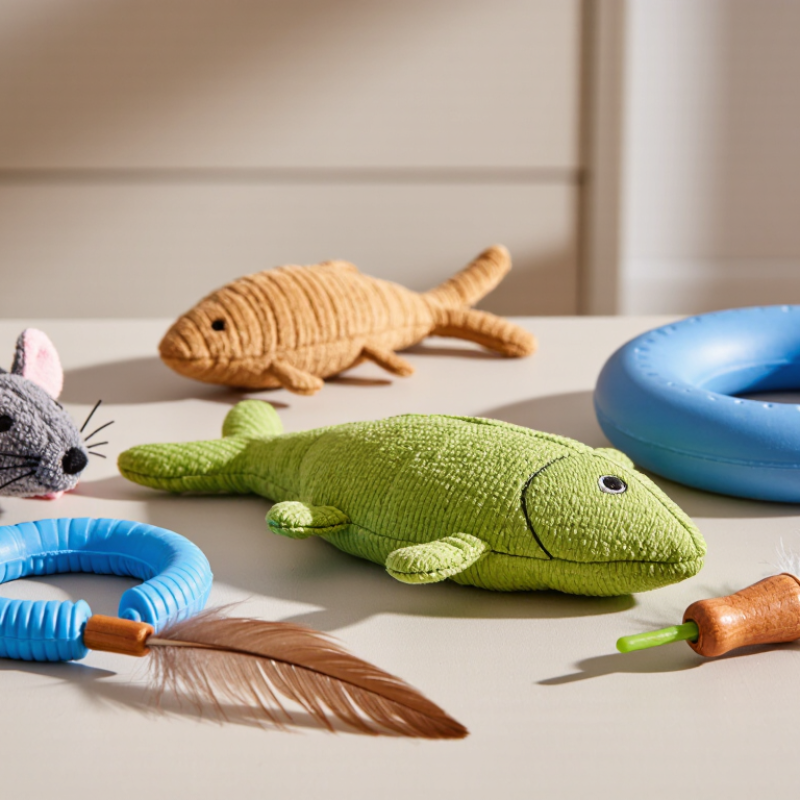
Cat chew toys give cats a safe object to bite, mouth, and explore. They may use soft fabric, flexible rubber, or textured surfaces that feel different under the teeth. Chewing can add sensory enrichment and help redirect interest from cords or furniture. Some cats ignore them. Preferences vary with age, play style, and texture, so one design rarely suits every household. A chew toy also does not replace interactive play, scratching surfaces, or routine veterinary care.
For wholesale buyers, useful product choices include varied shapes, textures, and sizes, with seams and attachments that are easy to inspect. Materials should be clearly described, and toys should have no loose pieces that could be swallowed during normal play. Fit matters. A toy that is too small may be difficult to handle, while a very firm surface may not appeal to some cats. Supervision is sensible, especially when a cat is trying a new item. Wear can happen sooner than expected; damaged toys should be removed. It is easy to overstate dental benefits: chewing may provide activity, but it should not be presented as a substitute for professional dental care.
| Rank | Toy Type | Common Materials | Typical Size Range | Potential Benefits | Wholesale Considerations | Safety and Quality Checks |
|---|---|---|---|---|---|---|
| 1 | Silvervine (Matatabi) Chew Sticks | Dried silvervine wood | About 8–15 cm long | Offers a natural chewing and batting option; some cats respond to silvervine’s scent. | Lightweight and easy to bundle; sort consistently by length and thickness. | Check for splinters, mold, sharp ends, and excessive dust. Supervise use and discard damaged sticks. |
| 2 | Catnip-Filled Plush Chew Toy | Woven fabric, polyester filling, dried catnip | About 8–18 cm long | Combines chewing, carrying, and kicking play; catnip may attract some cats but not all. | Offer varied shapes and neutral color options; confirm filling and seam specifications. | Use securely stitched seams and non-detachable decorations. Remove the toy if fabric or filling becomes exposed. |
| 3 | Textured Cat Dental Chew Toy | Pet-grade rubber or flexible TPR | About 7–13 cm long | Textured surfaces provide a chewable play experience and may help rub tooth surfaces during chewing; they do not replace dental care. | Request material documentation and compare texture, flexibility, and size across samples. | Ensure the toy is designed for cats, has no sharp edges, and cannot break into swallowable pieces. |
| 4 | Fabric Kicker with Chewable Ends | Durable woven fabric, soft filling | About 20–35 cm long | Supports gripping and hind-leg kicking as well as light chewing. | Longer format can complement smaller toys; evaluate shipping volume and seam strength. | Check stitching and fabric durability. Avoid cords, buttons, or other small parts that may detach. |
| 5 | Sisal-Wrapped Chew and Batting Toy | Natural sisal fiber, sturdy inner core | About 10–25 cm long | Provides a rough texture for batting and supervised chewing; also offers a scratchable surface. | Inspect fiber consistency and wrapping security; consider both loose and multi-piece assortments. | Fibers should not unravel easily or form long loose strands. Replace the toy if its core is exposed. |
| 6 | Food-Dispensing Chew-and-Play Toy | Cat-safe flexible rubber or molded plastic | About 7–12 cm across | Encourages food-seeking and interactive play; openings can hold a small portion of dry food or treats. | Offer easy-to-clean designs and clearly state compatible food or treat sizes. | Check that openings cannot trap a jaw or paw; verify that the toy is washable and free of sharp edges. |
| 7 | Crinkle-Fabric Chew Toy | Fabric with enclosed crinkle film | About 8–16 cm long | Sound and flexible texture can encourage batting, carrying, and gentle mouthing. | Compact, lightweight format suits mixed toy assortments; verify sound consistency between samples. | Crinkle material must remain fully enclosed. Check seams regularly and discontinue use if the film is exposed. |
| 8 | Refillable Catnip Chew Toy | Washable fabric or mesh, refillable pocket | About 8–15 cm long | Allows scent replenishment and can combine chewing with sniffing and play. | Refill access and replacement catnip can support repeat purchases; specify whether refills are included. | Use a secure closure that cats cannot easily open. Keep loose catnip and small closures out of reach. |
| 9 | Cat-Safe Cork Chew Toy | Natural cork, sometimes with a fabric cover | About 5–10 cm across | Lightweight texture can encourage batting and supervised mouthing. | Natural material may vary in color and texture; define acceptable variation and inspect batch consistency. | Choose dense, clean cork without coatings or sharp fragments. Replace if it crumbles or breaks apart. |
| 10 | Mesh Dental Play Toy | Durable woven mesh, soft filling | About 8–14 cm long | Flexible mesh offers a different texture for chewing and interactive play; dental effects should not be overstated. | Compare mesh strength, seam construction, and washability; request clear care instructions. | Check for loose threads and fraying. Do not market as a substitute for brushing or veterinary dental care. |
Buyer note: Size ranges are indicative examples, not standardized specifications. Select toys appropriate to the cat’s size and chewing style, supervise play, and remove any damaged toy. Chew toys support enrichment but do not replace routine veterinary dental care.