
Leave Your Message

Top Dog Chew Tail Suppliers for Global Buyers

Global buyers need more than a low quoted price when sourcing Dog Chew Tail products. They need suppliers who can explain raw-material origins, processing steps, product dimensions, and batch-level quality checks. A clear answer matters. This guide introduces supplier considerations that help importers compare offers with greater confidence. It focuses on practical details: chew length and thickness, odor and texture consistency, packaging protection, and the documents available for shipment review. Buyers should also ask how a supplier handles damaged goods, changing specifications, and customer feedback. Small details reveal a lot.

Reliable sourcing depends on evidence, not polished promises. Request representative samples and compare them with the written specification before discussing larger orders. Ask about inspection routines, storage conditions, production capacity, lead times, and how batch records are maintained. These questions can expose gaps early, although no checklist can remove every risk. Global shipping adds uncertainty; cartons may be delayed, and product characteristics can vary between batches. Plan for that. A supplier with responsive communication and realistic timelines may be more useful than one offering the lowest price. Still, responsiveness alone is not proof of quality. Buyers should verify claims, document agreed standards, and confirm that product labeling and shipping paperwork suit their destination and sales channel. Requirements differ across markets, so local review is prudent. This overview is a starting point, not a substitute for buyer due diligence. The right partner is the one whose product, process, and service can be checked consistently.
Top Dog Chew Tail Suppliers for Global Buyers

Dog Chew Tails Defined: Product Forms, Materials, and Common Uses

Dog chew tails are animal-derived treats made from cleaned and dried tail tissue, commonly sourced from cattle or pigs. Depending on the cut, a chew may include skin, connective tissue, cartilage, or bone. The name alone does not tell buyers exactly what is inside. Check the product specification.

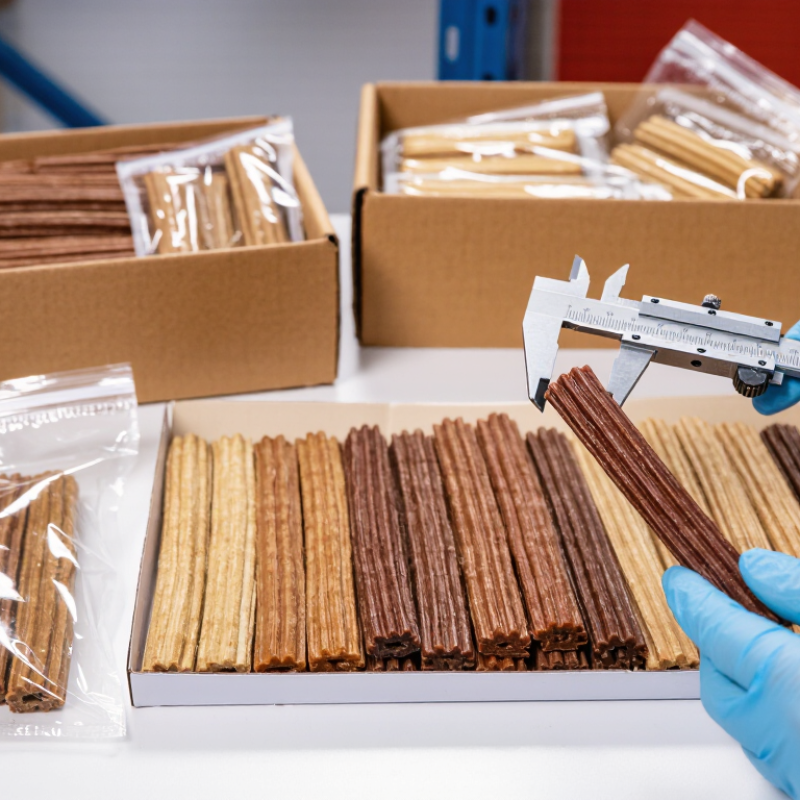
Common forms include whole tails, shorter cut sections, and flattened or split pieces. Some products use strips of tail material formed into compact chews. Processing varies too: drying methods affect texture, odor, and moisture, so two items from the same animal may feel quite different. Details matter.

Dogs chew these treats for enrichment and to satisfy chewing habits. A larger, firm piece may suit a strong chewer, while a smaller or softer piece can be easier for some dogs to manage. Not every dog. Match the size and texture to the dog, supervise chewing, and remove small fragments that could be swallowed. Tail chews are treats, not complete meals. Their shape and composition can be inconsistent, and that is worth checking rather than overlooking. A supplier should be able to clarify species, processing, and typical dimensions.


Dog Chew Tails: Product Forms and Common Uses

Typical use roles associated with each form. Counts reflect the use cases listed below, not sales or market-share data.

Both forms are commonly offered as animal-derived chews, with the animal source and processing varying by product. Chewing and enrichment are typical uses for both; cut sections can also make portioning easier. Choose a size and texture suited to the dog, supervise chewing, and remove small or damaged pieces.

Market Context: APPA Reported $147 Billion in U.S. Pet Spending in 2023

The American Pet Products Association (APPA) reported $147 billion in U.S. pet spending in 2023. That figure covers the wider pet market, not dog chews alone. Still, it signals how much households invest in animal care, food, and everyday products. For global buyers, the number offers useful context, but it should not be treated as a forecast for every region.

Demand for dog chew tails depends on practical details. Buyers often compare chew size, texture, ingredient disclosure, packaging, and shelf-life information. A clear product specification helps prevent mismatched expectations between supplier and importer. Ask for consistent batch records and samples that reflect the actual production run. Small details matter. A label that omits storage guidance can create avoidable questions after delivery.

Large spending figures can make a market look simple. It is not. Consumer preferences differ, and a popular product in one country may move slowly elsewhere. Supplier discussions should include production capacity, lead times, quality checks, and procedures for handling defects. Samples help, but they cannot guarantee every shipment will be identical. That limitation deserves honest attention.

Safety and Compliance: FDA, AAFCO, and EU Rules for Dog Chew Products

Dog chews cross several regulatory lines, so buyers should check the product’s intended use and composition before approving a supplier. In the United States, the FDA requires animal food to be safe, properly produced, and truthfully labeled. AAFCO is not a regulator; its model ingredient definitions and labeling guidance may inform state requirements. A chew’s label should match its actual ingredients and intended use.

Ask suppliers for ingredient specifications, manufacturing controls, and batch-level traceability. For a shipment, records should connect the finished chews to raw-material lots and production dates. Risk-based testing may include checks for moisture, microbial contamination, or unwanted residues. Not every test applies to every chew. Still, vague answers are a warning sign.

EU requirements can differ from U.S. rules. Depending on classification, a chew may fall under feed-material, complementary-feed, hygiene, or animal-by-product provisions. Import conditions and labeling details also matter. Request current documents for the destination market, including origin and processing information where applicable. A certificate alone is not proof of consistent quality. Paperwork can miss a problem. Buyers should review records, inspect samples, and clarify who handles compliance updates when recipes or production sites change.

Top Dog Chew Tail Suppliers for Global Buyers - Safety and Compliance: FDA, AAFCO, and EU Rules for Dog Chew Products

Compliance area United States: FDA United States: AAFCO European Union Supplier evidence buyers should request
Regulatory role FDA oversees animal food safety, labeling, and applicable facility requirements under federal law. AAFCO is a nongovernmental association. Its model rules and ingredient definitions are not federal law; states may adopt them. Feed is governed by EU legislation and enforced by national competent authorities in member states. A product-specific regulatory assessment for each destination market; do not treat a voluntary certificate as regulatory approval.
Ingredients and permitted use Animal food ingredients must be lawful for their intended use, such as being approved food additives or generally recognized as safe where applicable. AAFCO publishes ingredient definitions and model provisions that may be relevant where adopted by a state; an AAFCO listing alone is not FDA approval. Feed materials and additives must comply with applicable EU rules, including authorization requirements for feed additives. Full ingredient and additive list, supplier specifications, ingredient origin, and documented legal basis for use in each target market.
Manufacturing controls Applicable facilities must meet relevant FDA requirements, including current good manufacturing practice and preventive controls under the FSMA animal food rule, subject to exemptions and modified requirements. AAFCO model provisions may inform state feed-manufacturing rules; requirements depend on the state and product. Feed businesses generally must comply with feed hygiene requirements, including applicable registration or approval and hazard-based procedures. Facility registration or approval details where applicable, process-flow diagram, hazard analysis, sanitation records, and audit reports.
Labeling and claims Animal food labeling must be truthful and not misleading and must meet applicable federal and state requirements. AAFCO model labeling provisions may be adopted by states; check the rules of every state where the product will be sold. EU feed marketing and labeling rules apply, including requirements for particulars, claims, and responsible operator information. Final-market label review covering product name, ingredients, intended animal, directions, net quantity, operator details, and substantiation for claims.
Traceability and recall readiness Food businesses must meet applicable recordkeeping and traceability obligations; FDA may require records and corrective action in relevant circumstances. State feed laws and adopted model provisions may include product and distribution record requirements. EU general food law principles, including traceability and withdrawal or recall duties, apply to feed businesses. Lot coding, raw-material-to-finished-product records, customer distribution records, and a documented mock-recall procedure.
Animal-origin materials Animal-derived ingredients remain subject to applicable animal food safety and ingredient requirements; import rules may also apply. AAFCO definitions may describe certain feed ingredients, but do not replace applicable federal, state, or import requirements. Animal by-products used in pet food may be subject to Regulation (EC) No 1069/2009 and related implementing rules, including sourcing and processing conditions. Species and country of origin, approved establishment details where required, processing records, and export/import documentation for the destination.
Contaminants and product testing Products must not be adulterated; applicable safety limits and enforcement requirements depend on the hazard and product. AAFCO guidance or model provisions do not replace legally applicable safety limits or a product-specific risk assessment. EU rules include maximum levels for certain undesirable substances in feed, including under Directive 2002/32/EC and applicable amendments. Risk-based testing plan and recent batch-specific certificates of analysis from a competent laboratory; select tests based on ingredient and process risks.
Physical safety and use directions The manufacturer and marketer should assess foreseeable hazards and provide accurate directions and warnings; avoid unsupported safety claims. AAFCO model rules do not establish a universal chew-size or supervision standard; product claims must still comply with applicable law. Feed must be safe for its intended use and properly presented; applicable labeling and general safety duties remain relevant. Documented assessment of breakage, choking, sharp-fragment, and foreign-material risks; size guidance, supervision advice, and complaint trends.
Import and market access Imported animal food must meet applicable U.S. requirements; additional import, prior notice, and facility-related requirements may apply. AAFCO is not an import-approval authority. State and federal requirements should be checked separately. Imports may require compliance with EU and member-state conditions, including animal-health, border-control, and establishment requirements where applicable. Written confirmation of destination-market eligibility, required certificates, border documentation, and importer responsibilities before shipment.

Buyer note: Requirements depend on the product’s ingredients, processing, claims, and destination. Verify current federal, state, EU, and importing-country rules before placing an order; this table is a screening guide, not legal advice.

Supplier Evaluation: Traceability, Testing, Capacity, and Minimum Order Sizes

Top Dog Chew Tail Suppliers for Global Buyers

Evaluating a dog chew tail supplier starts with traceability. Ask for the source region, processing dates, lot codes, and records linking each shipment to its raw material batch. Request recent test reports for microbial safety, moisture, and relevant contaminants, preferably from an independent laboratory. A polished sample proves little; batch records matter more. The American Pet Products Association’s 2025 State of the Industry Report valued U.S. pet industry spending at $152 billion in 2024. That demand makes consistent supply important, but market growth alone does not verify a supplier’s controls.

Check whether stated capacity reflects routine output, not just a best-case month. Ask how the supplier handles seasonal shortages, rejected lots, and repeat orders. Compare the minimum order quantity with your storage space and sales pace; a low MOQ is useful only if quality stays consistent. Request sample specifications, packaging details, and a clear process for reporting defects. These details can reveal gaps that a quotation will not.

Tips: Keep one retain sample from each incoming lot, record its code, and compare it with the supplier’s test documents. Confirm lead times in writing. Then check them again. Small details matter.

Global Sourcing: Export Documents, Shipping Conditions, and Supply Risks

Global sourcing for dog chew tails starts with documents that match the actual shipment. Ask suppliers for a commercial invoice, packing list, product specification, and batch details. A certificate of origin may be needed, while animal-health certificates or import permits depend on the product and destination. Confirm requirements with the receiving-country authority or a qualified customs broker before booking. Small errors matter. A species description or product code that differs across documents can delay clearance.

Shipping conditions deserve equal attention. Chew tails should be packed in sealed, moisture-resistant inner bags and sturdy cartons, then kept dry during storage and transit. Ask how the supplier monitors humidity and handles delays, especially on long sea routes where condensation can damage packaging. Request recent batch records and a clear process for reporting damaged or inconsistent goods. These checks reduce uncertainty, but they cannot remove every risk. Port delays, changing import rules, and seasonal supply gaps may still affect delivery. I would not rely on a supplier’s assurance alone; written specifications and sample checks give buyers something concrete to review.