Finding a reliable China-based manufacturer for a Big Dog Stuffed Toy takes more than comparing prices. Size, shape, and softness all affect how a finished toy feels in a child’s arms or sits on a shop shelf. Seams around the legs and neck need particular attention, because those areas can face repeated pulling. Small details matter.
This guide introduces manufacturers serving the plush-toy market and highlights practical points to check before requesting a sample. Look for clear product specifications, experience with custom designs, consistent stitching, and suitable fabric options. Ask how the supplier handles sample approval, production checks, packaging, and delivery timelines. A neat catalog is useful, but it does not prove that every production run will match the sample.
Use the company information as a starting point, then verify details directly with each supplier. Request photos or physical samples, confirm measurements, and ask for relevant quality documentation for your intended market. Compare replies, not just quoted prices. A quick answer can be reassuring, though it is not a guarantee. Even experienced manufacturers can misunderstand a design brief; a sketch with dimensions and material preferences can prevent avoidable surprises. The strongest choice is the supplier whose capabilities, communication, and quality evidence fit your product goals. And keep asking questions.
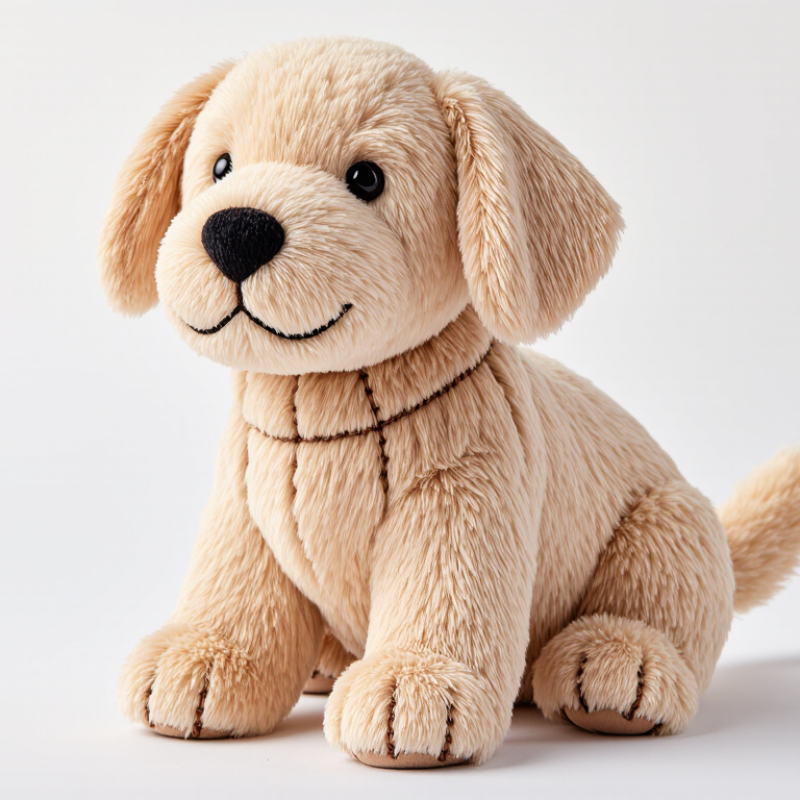
In China, “big dog stuffed toy” is a product description, not a universally fixed market category. Buyers usually mean a plush dog noticeably larger than a standard hand-held toy, often designed for hugging, room display, or gift use. A practical specification should state the finished height or length, measurement method, fabric, filling, and intended age group. Otherwise, “big” can mean very different things across supplier catalogues.
The market scope includes plush dog toys made with fabrics such as short-pile velboa, sewn panels, and soft filling. It also covers pattern development, sampling, stitching, stuffing, finishing, and wholesale production. Some products are made for retail shelves; others are customized for promotional or gift orders. Details matter. A large body can hide uneven stuffing, weak seams, or awkward proportions. Grand View Research estimated the global plush toys market at about US$11.9 billion in 2023 and projected 7.2% annual growth from 2024 to 2030. This is a global benchmark, not a China-only figure. It signals category demand, but does not prove demand for oversized dog designs specifically. Buyers assessing China-based manufacturers should compare sample measurements, seam consistency, fabric feel, and repeat-order specifications—not size claims alone.
| Dimension | Definition or Scope | Market Notes |
|---|---|---|
| Product definition | A big dog stuffed toy is a dog-shaped soft toy with a textile outer covering and a soft filling, designed primarily for play, display, or gifting. | “Big” is a descriptive size term, not a single, universally standardized product-size category. |
| Products included | Plush dog toys sold as soft toys, including sitting, standing, lying, and character-style dog designs. | Products may differ in construction, detailing, intended age group, and use. |
| Products excluded | Real dogs, pet chew toys made primarily from rubber or hard plastic, inflatable toys, and dog-shaped products not intended to function as soft toys. | Mixed-material products should be classified according to their principal design and intended use. |
| Size and format | May be described by finished height, length, or overall dimensions; manufacturers and retailers may use their own size labels. | For clear comparison, specify the measurement method and dimensions rather than relying only on terms such as “large” or “jumbo.” |
| Materials | Common construction components can include a textile shell, soft filling, sewing thread, and decorative or functional accessories. | Exact materials vary by product. Material composition should be confirmed from product specifications or supplier documentation. |
| Manufacturing scope in China | Relevant manufacturing activities can include pattern development, fabric cutting, sewing, stuffing, finishing, inspection, and packing. | Not every supplier performs all stages in-house; sourcing and production arrangements differ by supplier. |
| Typical buyers and channels | Potential buyers include toy retailers, importers, wholesalers, gift sellers, and purchasers seeking custom or private-label products. | Sales channels may include retail stores, online marketplaces, wholesale trade, and made-to-order business supply. |
| Customization scope | Possible specifications include size, fabric, color, embroidery, accessories, packaging, and product labeling. | Availability, minimum order quantities, lead times, and customization terms must be verified with each supplier. |
| Safety and compliance | Requirements depend on the product’s intended market, age grading, materials, and design. Relevant toy-safety and chemical requirements should be identified before sale. | Request applicable test reports and compliance documents for the specific product and destination market; requirements should not be assumed from a generic product description. |
| Supplier comparison criteria | Useful evaluation points include product samples, material traceability, quality-control procedures, production capacity, communication, and export experience. | Compare suppliers against the same written specification and verify claims independently where possible. |
| Manufacturer ranking and market data | This scope table does not rank manufacturers or estimate China market size, sales, or market share. | A defensible ranking or market estimate requires dated, comparable evidence such as verified production, sales, or trade data. |
A large dog plush toy tests more than sewing skill. Its long limbs, broad muzzle, and heavy body can strain seams during repeated handling. Grand View Research estimated the global toys market at about USD 108.7 billion in 2023. That figure signals a competitive market, not proof of any factory’s capability. Ask suppliers for recent production records, material specifications, and inspection reports for similarly sized plush toys. Small details matter. Check the stitch density around the neck, leg joints, and zipper area, where pulling can expose weak construction.
Request a sample made with the proposed fabric, filling, and pattern—not a showroom sample made by hand. Measure it, weigh it, and inspect whether it sits upright without lopsided stuffing. Ask how the factory controls fabric shade, filling weight, and seam strength between batches. Ask for evidence. Then check consistency. The International Organization for Standardization’s ISO Survey tracks certifications worldwide, but a certificate alone does not verify a toy’s workmanship. Review its scope, expiry date, and issuing body, then compare the claims with production records. I would also ask to see a failed sample or rework log; some suppliers may hesitate, but their answers can reveal how problems are handled. Keep specifications and acceptance criteria in writing before placing an order.
China’s large dog stuffed toy manufacturers generally fall into three groups: full-service factories, cut-and-sew workshops, and design-led suppliers. Full-service factories may handle pattern development, fabric sourcing, sewing, stuffing, and packing. Smaller workshops often focus on sewing or assembly, so buyers may need to coordinate materials separately. Capabilities vary by facility, not just by company size.
For oversized dog plush toys, production depends on more than sewing capacity. Teams need patterns that support long limbs, balanced stuffing, and stable sitting or lying poses. A factory may offer embroidered features, different pile fabrics, and custom filling density. Ask how it manages prototypes, seam-strength checks, and batch inspections. A sample can still disappoint. One detail is easy to miss: floppy ears may hang differently at full scale than they do on a small prototype.
Tips: Share the target dimensions, fabric feel, and intended pose before requesting a quote. Ask for close-up photos of seams and a sample made with the proposed materials. Confirm which production steps happen in-house and which are outsourced. Compare the sample with the approved specification, especially around the muzzle, paws, and belly. Small changes matter. Allow time for revisions; a neat drawing does not always translate into a convincing plush shape.
A qualitative comparison of common manufacturer types—not verified factory ratings or guaranteed production capacity.
Scores use an indicative 1–5 scale to compare typical service profiles. Actual capabilities vary by factory, product complexity, order size, materials, and testing requirements. Confirm specifications and compliance documentation directly with suppliers.
A large dog-shaped stuffed toy needs more than a soft exterior. For the shell, manufacturers commonly consider plush polyester fabric, while polyester fiberfill keeps the body light and washable. The exact fabric weight and pile length affect durability: long, loose fibers may mat faster under frequent handling. Ask suppliers for material specifications and test reports, not just a fabric sample. Samples can feel reassuringly soft, yet hide weak seams.
Safety checks should match the toy’s intended market and age group. Buyers can ask whether testing covers relevant requirements, such as EN 71 or ASTM F963, where applicable. Confirm that small parts, attachments, and decorative features are assessed for detachment risks. For oversized toys, inspect the eyes, nose, and paw seams closely; these areas often take repeated pulling. Clear documentation matters.
Quality control should continue beyond the first sample. A practical inspection plan checks incoming fabric, stitching density, filling distribution, dimensions, and finished-toy appearance across production batches. Ask how defects are recorded and what triggers rework. A gentle tug test can reveal loose seams, but it cannot replace formal testing. No check catches everything. Even a careful process can miss an unevenly filled leg, so buyers should agree on measurable acceptance criteria before production.
China’s large dog plush toys need more than soft fabric and a friendly face. Buyers should specify finished height, seated width, pile length, filling weight, and seam strength. Ask factories for a pre-production sample, then compare it with the approved measurements. Fortune Business Insights estimated the global stuffed animal and plush toy market at about US$11.9 billion in 2023, with growth projected through 2032. That market signal is useful, but it does not guarantee demand for oversized designs. Large toys use more fabric and filling, and their shipping cartons can quickly raise freight costs. Measure the packed sample, not just the unboxed toy. Small details matter.
For customization, request fabric swatches, embroidery proofs, and a clear record of approved changes. Check that eyes, noses, and decorative parts remain secure after handling and washing tests. Ask for material specifications and production inspection records; photos alone cannot confirm consistency. Export planning should cover carton dimensions, gross weight, packing method, lead time, and destination-market labeling or testing requirements. Confirm these with the importer and relevant testing professionals before production. The awkward part is often the sample-to-bulk transition: colors can shift, and stuffing can feel uneven. I would still reserve time for a second sample and a final pre-shipment check. That costs time. It may prevent costly rework.