Moving Cat Toys have become a visible category in the global pet-care market. Buyers are not choosing movement alone. They want indoor cats to chase, stalk, and explore in limited living spaces. A toy circling across a rug can create a small hunting scene beside a sofa. It can also give owners a practical way to encourage daily activity.
Industry data supports this interest. The American Pet Products Association’s 2024 National Pet Owners Survey shows the continuing strength of cat ownership and household spending in the United States. Euromonitor International’s pet-care research also identifies premiumization and pet wellness as important consumer trends. Meanwhile, Grand View Research reports continued growth in the global pet toys market, supported by online retail and product innovation. These reports do not measure Moving Cat Toys in exactly the same way. That limitation matters.
The appeal is therefore both emotional and functional. Automated motion, unpredictable paths, and textured attachments can imitate parts of natural play. However, movement does not automatically mean better enrichment. Owners still need to consider noise, durability, battery safety, cleaning, and supervision. Cats also differ sharply in age, temperament, and interest. A fast spinning toy may excite one cat and frighten another.
Global buyers increasingly read reviews, compare materials, and expect clearer product information. Retailers should explain use time, replacement parts, and safe storage. They should avoid exaggerated claims about exercise or behavior improvement. The category is promising, but not perfect. Better evidence, transparent testing, and thoughtful design will determine whether popularity becomes lasting trust.
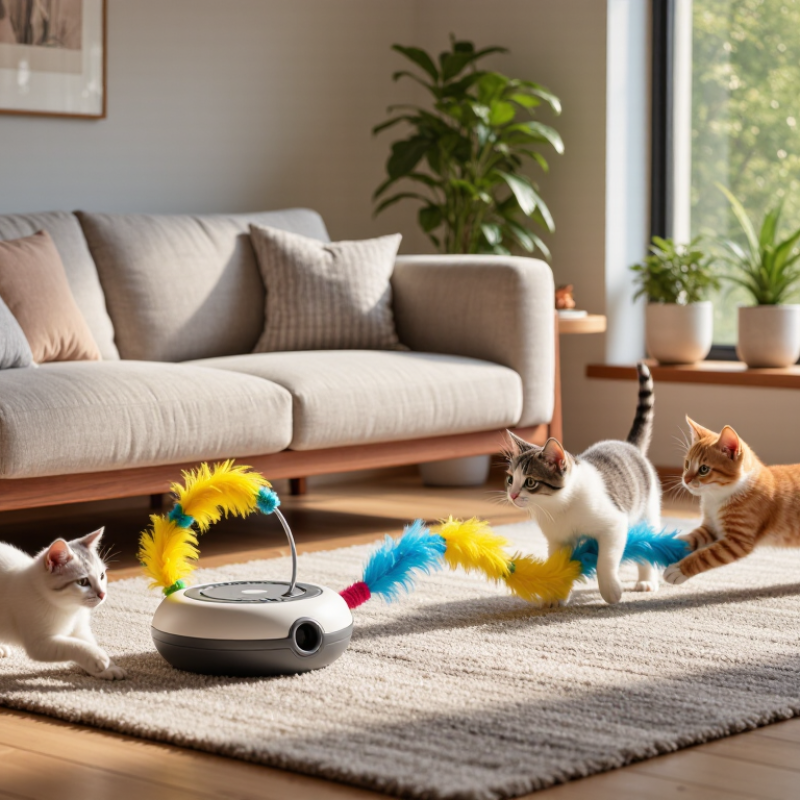
APPA’s 2023–2024 National Pet Owners Survey reported that 66% of U.S. households owned a pet. Cats remained part of millions of these homes, strengthening demand for practical enrichment products. This ownership rate matters beyond household numbers. It suggests that indoor cats need more stimulation during long periods without human interaction. Moving toys imitate small, unpredictable prey. A rolling object under a sofa can trigger stalking, chasing, and pouncing within minutes. These activities support physical movement and may reduce boredom-related behavior. The American Veterinary Medical Association also recognizes play as an important part of companion-animal welfare. Still, a moving toy is not a complete welfare solution.
Global buyers also respond to convenience, safety, and apartment-friendly design. Euromonitor International’s pet care research has repeatedly identified premiumization and pet humanization as major market trends. Buyers increasingly seek products that fit daily routines, including quiet toys for small rooms and automatic movement for busy owners. The 2024 U.S. Pet Industry Market Size and Ownership Statistics report also showed continued consumer spending on pet products and services. However, spending does not always equal better enrichment. Some cats ignore expensive toys after one day. Others prefer a paper ball or a simple string-like object, used only under supervision. Product descriptions should therefore explain motion patterns, materials, battery needs, and cleaning requirements clearly. Sellers should avoid promising guaranteed exercise or behavioral improvement. Cat preferences vary widely, and that uncertainty deserves more attention.
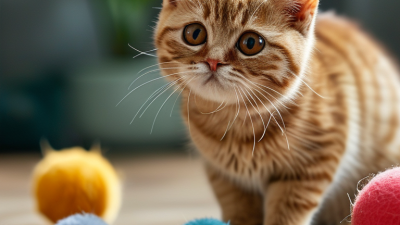
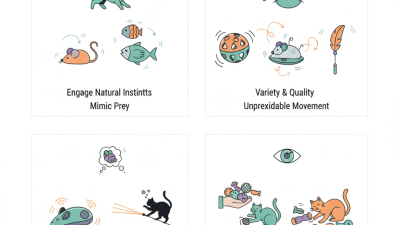
Moving cat toys are popular because they imitate the movement of living prey. This design connects with a cat’s natural hunting sequence: notice, orient, stalk, chase, and pounce. From an exercise perspective, changing speed matters. A toy that pauses behind a chair encourages careful watching, while a sudden turn activates fast muscles and balance.
The pause matters. Cats often crouch low, widen their eyes, and shift their weight before launching forward. These small actions train coordination, body control, and visual tracking. Short play sessions can also raise the heart rate without forcing constant movement. Veterinary behavior guidance commonly supports interactive play because it combines physical activity with mental stimulation. In my own observations, a toy dragged along a hallway creates longer, more focused movement than one waved directly in front of a cat.
However, the response is not identical for every cat. Age, body condition, confidence, and previous experience can change the result. Some cats prefer slow crawling motion. Others need quick bursts. A moving toy is not a complete fitness plan. It should also be used safely, especially when it contains strings, small parts, or detachable pieces. I have noticed that people sometimes mistake excitement for healthy exercise. A cat may chase intensely for thirty seconds, then stop because the movement became overwhelming. That detail deserves more attention. Rotating toy patterns and ending with a catch may better match the natural hunt, though individual cats still require patient adjustment.
| Behavioral or Exercise Dimension | Natural Feline Behavior | How Moving Toys Provide Stimulation | Potential Exercise or Welfare Value | Relevant Data or Evidence | Why This Matters to Global Buyers |
|---|---|---|---|---|---|
| Predatory sequence | Domestic cats retain a flexible hunting sequence that may include orienting, watching, stalking, chasing, pouncing, grabbing, biting, and manipulating an object. | Irregular movement can imitate the changing direction and speed of small prey, encouraging cats to track and pursue the object. | Supports short bursts of physical activity and provides an outlet for species-typical behavior. | Strong behavioral basis: feline play commonly resembles elements of predation, especially stalking, chasing, and pouncing. | Moving toys can offer more than passive entertainment because they engage several recognizable stages of the hunting sequence. |
| Visual tracking | Cats are highly responsive to small, moving targets and can use vision to monitor changes in position and direction. | Rolling, darting, circling, or pausing creates visual targets that require repeated attention and orientation. | Encourages head, neck, shoulder, and whole-body movement during tracking and repositioning. | Behavioral evidence: prey movement is a major stimulus for feline attention and pursuit behavior. | Visual motion is easy to understand across different household environments and does not depend on language or training. |
| Chasing and sprinting | Cats naturally use brief, high-intensity bursts rather than sustained endurance exercise when pursuing prey. | Moving toys can trigger short runs, rapid changes of direction, and repeated chase-pause cycles. | May contribute to daily activity and help reduce prolonged sedentary periods, especially for indoor cats. | Physiological pattern: feline activity is typically intermittent, with short bouts separated by rest. | Short interactive sessions are practical for busy households and can fit indoor living spaces of different sizes. |
| Pouncing and jumping | A hunting cat may lower its body, shift weight backward, and launch forward to capture a target. | A toy that changes direction or moves away can invite crouching, pouncing, jumping, or reaching. | Activates the hind limbs, core, forelimbs, and balance systems when the cat chooses to jump or leap. | Functional relevance: pouncing combines coordination, acceleration, balance, and target timing. | Buyers often value products that create visible, active participation rather than only chewing or batting in place. |
| Manipulation and capture | After capture, cats may hold, bite, paw, kick, or reposition prey before disengaging. | Lightweight moving objects can be batted, pinned, carried, or pushed, allowing multiple forms of interaction. | Provides movement for the paws, shoulders, jaw, and body while supporting exploratory play. | Behavioral basis: object manipulation is a normal component of feline play and predatory behavior. | Multi-action play can increase perceived usefulness because one toy may support chasing, catching, and batting. |
| Unpredictability and novelty | Prey does not move in a perfectly repetitive pattern; unpredictable changes can maintain attention. | Random pauses, variable routes, and changes in speed can make the interaction less predictable than a stationary toy. | Promotes repeated orientation, decision-making, and physical repositioning. | Enrichment principle: novelty and controllable variation generally help maintain interest in captive and indoor animals. | Movement variety can help reduce boredom and may be attractive to households seeking repeat-use enrichment. |
| Indoor activity support | Indoor cats may have fewer opportunities to stalk, chase, and explore than free-ranging cats. | Moving toys create an indoor simulation of pursuit without requiring outdoor access. | Can add structured activity to an indoor routine and complement climbing, scratching, feeding, and exploration opportunities. | Welfare guidance: environmental enrichment is recommended to support physical activity and behavioral expression in indoor cats. | Suitable for apartments and homes where outdoor roaming is restricted or unsafe. |
| Weight-management relevance | Low activity combined with excessive calorie intake can increase the risk of unwanted weight gain. | Interactive movement may encourage additional voluntary activity when the cat is motivated to pursue the toy. | May support an overall weight-management plan when combined with measured feeding and veterinary guidance. | Important limitation: play is not a substitute for calorie control, medical assessment, or an individualized exercise plan. | Buyers may view moving toys as a practical supplement for indoor cats, but responsible use requires realistic health expectations. |
| Session structure | Cats often prefer several brief activity periods instead of one prolonged session. | Moving toys can be used for short interactive sessions that end after the cat loses interest or completes a capture sequence. | Allows activity to be distributed throughout the day and adjusted to age, health, temperament, and mobility. | Practical guideline: brief, regular play sessions are commonly recommended; exact duration should be individualized. | Flexible session length makes moving toys suitable for different schedules, ages, and household routines. |
| Human–cat interaction | Many cats benefit from predictable, positive interaction with their caregivers, although preferences differ between individuals. | Owner-controlled movement allows the caregiver to vary speed, distance, pauses, and direction according to the cat’s response. | Combines physical activity with attention, observation, and relationship-building. | Individual variation: cats differ in play style, motivation, age, health, and tolerance for noise or rapid movement. | Interactive control can make a toy adaptable across households instead of relying on one fixed movement pattern. |
| Safety and recovery | Predatory play can become intense, particularly when a cat is highly motivated or physically active. | Supervised play allows the caregiver to stop the toy, remove damaged parts, and provide rest or a successful capture. | Supports safer activity management and reduces the risk of excessive fatigue, frustration, or ingestion of loose components. | Safety requirement: toys should be inspected regularly, and small detachable parts or strings should not be left unsupervised with cats. | Safety, durability, noise level, and ease of cleaning are important practical factors for buyers in all markets. |
Why Are Moving Cat Toys Popular with Global Buyers?
Moving cat toys are gaining attention as pet owners seek practical indoor enrichment. A rolling ball crossing a wooden floor can trigger chasing, stalking, and pouncing. These actions resemble natural hunting behaviors. They also help cats stay active in smaller homes and apartments. From observing household cats, movement often attracts attention faster than silent toys.
Grand View Research reports that the global pet toys market reached approximately USD 7.57 billion in 2023. The research firm projects a compound annual growth rate of about 6.7% from 2024 to 2030. This expansion reflects higher pet ownership, stronger spending on animal welfare, and growing interest in interactive products. Moving toys fit this trend because they provide stimulation without requiring constant human control. However, popularity does not guarantee quality. Some toys move too quickly, create excessive noise, or frustrate cautious cats. The market still needs better attention to safety, durability, and animal preferences.
Tips: Choose toys with secure parts and smooth edges. Match movement speed to your cat’s age and confidence. Watch the first play session carefully. Replace damaged toys promptly. A quiet, slower toy may work better than an impressive one. Personal testing matters, because market trends cannot predict every cat’s behavior.
Global Pet-Toy Market Expansion Based on Grand View Research Data
Grand View Research reported that the global pet toys market was valued at approximately USD 7.57 billion in 2023 and is projected to expand at a 5.7% CAGR from 2024 to 2030. The annual figures shown above are calculated from this reported market base and growth rate. Interactive and moving cat toys can benefit from rising demand for pet enrichment, exercise, and at-home entertainment.
Source: Grand View Research, Pet Toys Market Size, Share & Trends Analysis Report.
Why Are Moving Cat Toys Popular with Global Buyers?
Global buyers increasingly seek moving cat toys because they create activity inside small homes. A toy that rolls, pauses, and changes direction can encourage stalking behavior. This matters for indoor cats with limited climbing space. Yet movement alone does not guarantee useful play. The design must match a cat’s size, age, confidence, and habits.
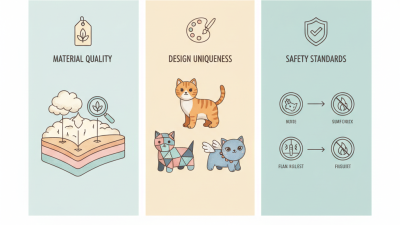
Safety remains the first purchasing concern. Buyers inspect smooth edges, secure battery covers, and tightly fitted parts. They also prefer non-toxic, odor-free materials that withstand biting and scratching. A responsible seller should describe cleaning methods and provide clear supervision guidance. During practical checks, the toy should run without exposed wires or loose fragments. Noise deserves attention too. A loud motor may frighten cautious cats rather than engage them.
Durability affects value over time. Strong wheels, reinforced seams, and reliable switches reduce early replacement. Interactive value also depends on variation. Adjustable speed, hidden movement, and short play cycles can prevent boredom. However, some products promise more than they deliver. A toy may spin impressively for ten minutes, then become predictable. Buyers should examine real use feedback, not only polished product images. Cats are individual, and even a well-tested design can be ignored. That uncertainty should remain part of an honest product description.
Moving cat toys are gaining attention because online shopping makes interactive play easy to discover. Product videos show a toy rolling across a floor, stopping, and changing direction. These details help buyers imagine play before purchase. Search data also shows rising interest in homes where cats spend most of their time indoors. Many shoppers seek activity that supports movement without demanding constant human attention. Convenience matters.
Regional pet-care habits shape which features sell. In dense Asian cities, quiet motors and compact designs suit smaller apartments. In North American markets, buyers often compare battery life, washable parts, and return policies. European shoppers may examine material disclosures and energy use more closely. Hot climates can increase interest in easy-clean surfaces and ventilated storage. These patterns are not fixed. E-commerce platforms connect local needs with global supply. Customer reviews reveal practical concerns, including noise, weak wheels, and confusing controls.
From a product-evaluation perspective, safe movement matters more than speed. Toys should avoid loose pieces, sharp edges, and cords that cats might swallow. Owners should supervise early play and inspect worn parts regularly. Cats also differ widely. Some chase moving objects for ten minutes; others watch them suspiciously. That weakness is easy to hide in polished videos. Sales numbers alone cannot prove better welfare or lasting engagement. Clear instructions, honest testing, and region-aware support make adoption more credible, even when a toy does not become every cat’s favorite.