Leave Your Message
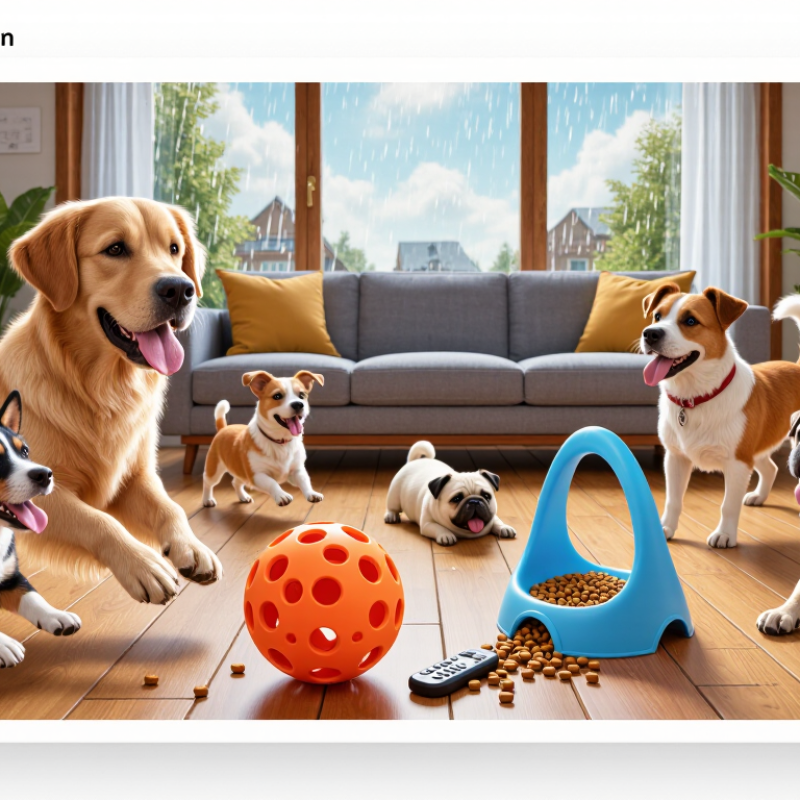
Moving Dog Toys have become popular because they turn ordinary play into an active, engaging experience. A rolling ball, wobbling feeder, or remote-controlled toy can cross a living-room floor and immediately capture a dog’s attention. The movement resembles small prey, which may encourage natural behaviors such as chasing, tracking, and problem-solving.
Dr. Zazie Todd, PhD, an animal behaviorist and author, offers a useful welfare principle: “Play should be enjoyable, voluntary, and suited to the individual dog.” That idea matters. Moving Dog Toys are not automatically suitable for every pet. A nervous dog may avoid sudden noises, while a confident terrier may chase one for twenty minutes. Owners should watch body language, including relaxed ears, playful movements, and signs of stress.
These toys can also support dogs living indoors, especially when bad weather limits outdoor activity. A treat-dispensing toy may keep a dog focused beside the kitchen table. A slow-moving toy may encourage an older dog to take gentle steps. Still, motion alone does not replace walks, training, or human companionship. That assumption is easy to make.
Some toys break quickly. Others become boring.
The most reliable choice matches the dog’s size, age, bite strength, and play style. Supervision is sensible, particularly during the first session. The real appeal of Moving Dog Toys is not technology itself. It is the way controlled movement creates curiosity, activity, and shared observation between dogs and their owners. It works well, sometimes. Careful selection makes the difference.
Why Are Moving Dog Toys So Popular?
What Moving Dog Toys Are and How They Work
Moving dog toys are play objects that move, wobble, roll, or vibrate to attract a dog’s attention. Some react to a nose bump or paw tap; others follow a simple timed pattern. Their motion can encourage chasing, sniffing, and problem-solving, giving indoor play more variety than a stationary toy. The mechanism varies: a small motor may drive wheels, while an uneven base makes a toy wobble across the floor. Not every dog enjoys this. Sudden noise or unpredictable movement can make a cautious dog back away.
Tips: Start with the toy switched off, letting your dog sniff it at their own pace. Then try a short session on a clear, non-slip floor. Watch for relaxed body language, such as loose posture and curious sniffing. If your dog freezes, hides, or repeatedly tries to escape, pause and give them space. Check moving parts and the toy’s condition before each session; damaged pieces may become a choking risk. Supervise play, especially with puppies or dogs that chew intensely. It is easy to assume more movement means more fun, but that is not always true. A quiet toy and a few minutes of play may suit your dog better.
| Dimension | What It Is | How It Works and Why It Matters |
|---|---|---|
| Definition | A moving dog toy is a play object designed to move, wobble, roll, or otherwise change position during use. | Its movement can prompt a dog to watch, approach, chase, paw, or investigate, making play more interactive than with a stationary toy. |
| Common Movement Types | Examples include rolling balls, wobbling toys, toys that vibrate, and toys that move unpredictably across a floor. | Different movement patterns invite different responses. A rolling toy may encourage chasing, while a wobbling toy may invite nudging or pawing. |
| Power and Motion | Some moving toys use batteries and a small motor; others move through a dog’s pushes, pulls, or nudges. | In motorized designs, electrical power drives the mechanism that creates movement. In manually powered designs, the dog’s interaction supplies the force. |
| Activation | Depending on the design, movement may start with a button, a timer, or a response to touch or nearby activity. | A sensor-enabled toy may use a sensor to detect a stimulus and trigger movement. Features and activation methods vary by toy. |
| Why Dogs Notice Them | Movement, sound, texture, and changing direction can make a toy noticeable and interesting to some dogs. | A moving object can invite attention and play, but individual reactions differ. Some dogs may be curious, while others may find the movement startling. |
| Play and Enrichment | These toys can add movement and interaction to a play session. | They may encourage chasing, sniffing, or problem-solving, depending on the toy and the dog. They are a play option, not a substitute for exercise, training, or social interaction. |
| Food-Dispensing Designs | Some toys combine movement with a compartment or opening for treats or kibble. | As the dog nudges or moves the toy, food may be released. Use an appropriate portion of the dog’s daily food and follow the toy’s instructions. |
| Choosing a Suitable Toy | Size, construction, movement style, and the dog’s chewing habits are important selection factors. | Choose a toy appropriate for the dog’s size and play style. No toy is indestructible; inspect it regularly and replace it if damaged. |
| Safe Use | Moving toys may contain batteries, small parts, or mechanisms that require care. | Supervise play, especially at first. Follow battery and cleaning instructions, keep loose parts out of reach, and stop use if the toy becomes damaged or the dog seems distressed. |
| Why They Are Popular | They add motion and variety to play, and some designs can be used for interactive or food-based activities. | Their appeal comes from combining movement with opportunities to engage. Whether a particular toy is enjoyable depends on the individual dog and should be judged through supervised play. |