Leave Your Message

2026 Best Mouse Toy for Cats for Wholesale Buyers

A Mouse Toy For Cats can look convincing in a catalog and still disappoint on the shop floor. For wholesale buyers planning their 2026 assortment, the real test goes beyond a furry body and stitched whiskers. Can cats grip it, chase it, and carry it comfortably? Will its seams withstand repeated grabbing and kicking? Details matter. A loose tail, exposed adhesive, or easily detached eye can turn an attractive sample into a purchasing concern.

Cat behavior expert Jackson Galaxy describes a cat’s natural activity cycle as “hunt, catch, kill, eat, groom, sleep.” That sequence offers a useful lens for evaluating mouse toys, especially designs intended for stalking, pouncing, and capture. Look for manageable sizes, secure construction, and textures that encourage interaction without shedding excessively. For electronic models, examine battery access, operating noise, and instructions alongside movement quality. Request material specifications and relevant product test reports for each destination market. Check the sample. Product photographs cannot establish durability, and a supplier’s general assurance cannot replace documentation tied to the actual item.

This 2026 buying guide approaches selection through feline behavior, construction quality, and practical wholesale requirements. It considers unit cost alongside packaging, minimum order quantities, replacement policies, and consistency between samples and production stock. There is room for uncertainty: a mouse that fascinates one cat may leave another completely indifferent. Even a promising sample deserves further scrutiny before a large order. The goal is a defensible shortlist, supported by clear specifications and realistic expectations about how cats actually play.
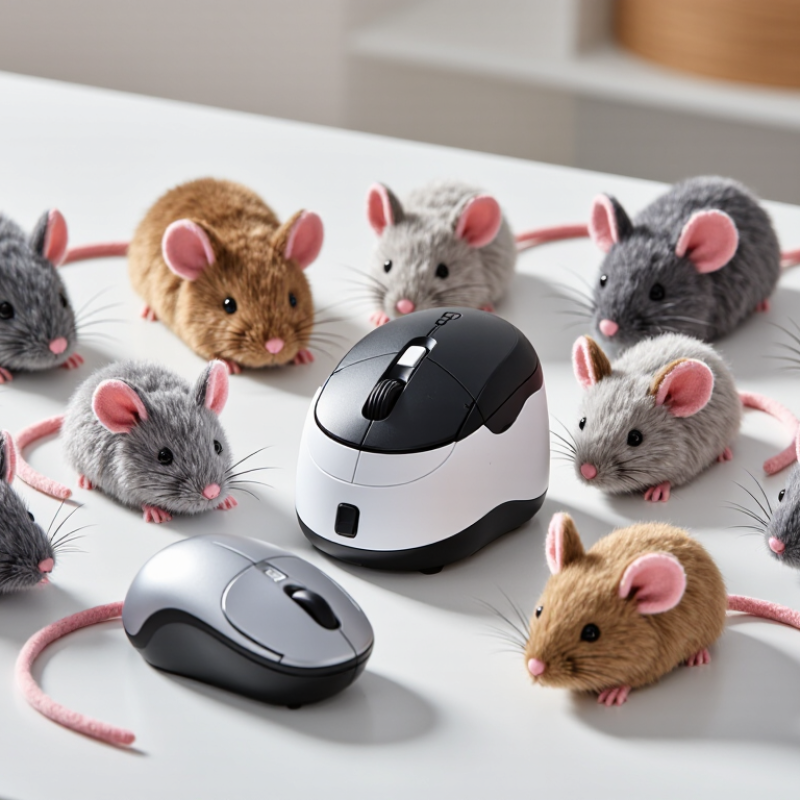
2026 Best Mouse Toy for Cats for Wholesale Buyers

Cat Mouse Toys: Definitions, Types, and Feline Play Behaviors

Cat mouse toys are prey-shaped objects designed for stalking, chasing, pouncing, and grabbing. Common types include plush mice, fabric-covered rattlers, wand attachments, and battery-powered moving mice. Texture matters. Soft bodies allow gripping and kicking, while lightweight designs slide across floors during pursuit. For wholesale buyers, useful specifications include dimensions, weight, stitching quality, and detachable components. A mouse shape alone does not guarantee engagement.

Feline play often follows parts of the hunting sequence, including watching, stalking, chasing, and capturing. A 2021 Current Biology study by Cecchetti and colleagues involved 355 cats across 219 households. Daily object play lasting five to ten minutes reduced prey brought home by 25%. That finding concerns hunting outcomes, so it cannot establish which mouse toy sells best or suits every cat. The 2013 AAFP/ISFM environmental guidelines also identify opportunities for play and predatory behavior among five feline environmental needs. Let cats catch.

For 2026 assortments, compare how each design supports these behaviors in realistic settings. A fabric mouse dragged behind a chair creates brief concealment before a chase. A larger plush mouse offers a surface for foreleg gripping and hind-leg kicking. Motorized models add movement, but noise may discourage cautious cats. That remains a purchasing tradeoff. Request samples and check seams after repeated gripping and pulling. Avoid assuming that added features automatically improve play value.
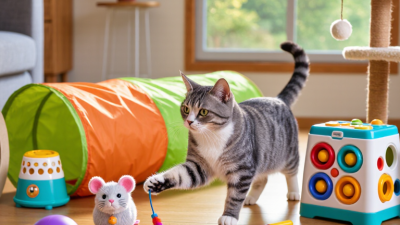
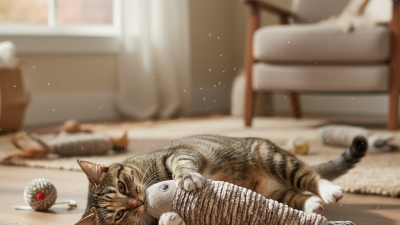
Materials, Safety Features, and Durability of Cat Mouse Toys

For 2026 wholesale buying, the best mouse toy for cats needs more than a convincing silhouette. The U.S. pet industry’s 2025 State of the Industry Report estimates 94 million American households own pets. Around 49 million own cats. That market makes material consistency important across repeat orders. Specify tightly woven fabric, securely enclosed filling, and embroidered eyes. Request fiber composition and batch traceability documents. “Natural” alone proves little.

Small details matter. Glued eyes, loose bells, and detachable tails deserve particular scrutiny because they can become ingestion hazards. Ask suppliers for documented seam-strength testing and component-retention results, including test methods and sample sizes. Chemical test reports should identify the tested materials and match the supplied product. A generic certificate may miss the actual fabric, dye, or filling. For electronic mice, check that battery compartments resist opening during foreseeable play.

Inspect beyond appearance. Compare samples from different cartons, checking exposed stitching, leaking stuffing, and tails that loosen under repeated pulling. Record failures rather than accepting “durable” as a specification. There is no single lifespan that fits every cat’s chewing and play habits. A soft plush mouse may attract interest yet wear faster than a tightly woven alternative. That tradeoff needs honest evaluation. Wholesale packaging should recommend supervised play and replacement when seams open or components loosen.

How to Evaluate the Best Cat Mouse Toys for Wholesale Buying in 2026

Evaluating the best cat mouse toys for wholesale buying in 2026 starts with samples, specifications, and realistic purchasing costs. Check the seams. Look for exposed glue, loose eyes, detachable tails, and stuffing that escapes when seams are pulled. Ask suppliers to document fabric composition, filling materials, dimensions, and weight tolerances before comparing quotations across different production batches. A 5-centimeter plush mouse and a larger motorized model serve different play preferences and require different quality checks. Neither suits every cat.

Tips: Request samples from two production batches, then compare stitching, odor, dimensions, and loose fibers on a white cloth. Record defects with close-up photos. For electronic mice, inspect battery-compartment security and request operating instructions. Hand checks reveal obvious weaknesses, but they cannot establish safety or replace relevant laboratory testing.

Compare landed cost per sellable unit, including freight, packaging, inspection fees, and an allowance for defective stock. Ask for test reports linked to the exact product model, and verify their relevance to your destination market. Generic certificates deserve scrutiny. For catnip-filled mice, request filling weights, storage guidance, and packaging details that help preserve aroma. A lower price may justify simpler packaging; inconsistent stitching is harder to accept. Small trial orders can reveal customer preferences, although early sales may reflect novelty rather than lasting demand. Set reorder quantities using sell-through data and documented return reasons.

2026 Best Mouse Toy for Cats for Wholesale Buyers - How to Evaluate the Best Cat Mouse Toys for Wholesale Buying in 2026

A practical comparison of mouse toy constructions, feline play features, and wholesale quality checks.

Qualitative purchasing guide for 2026. These are established material and design considerations, not sales rankings or laboratory results. Actual performance depends on the individual product.
Mouse Toy Type Construction and Play Features Suitable Assortment Role Quality and Safety Checks Cleaning Considerations Wholesale Evaluation Priority
Stuffed Fabric Mouse A fabric shell contains soft filling. The lightweight body supports batting, carrying, and pouncing. A basic standalone toy or multipack option for supervised play. Inspect seams, filling containment, and attached ears or tails. Embroidered details avoid separate glued-on eyes, although stitching still requires inspection. Follow the care label. Machine washability depends on the fabric, filling, and any internal components. Consistent stitching, secure attachments, and accurate size and material specifications.
Catnip-Filled Mouse Contains catnip inside a fabric body. Catnip can stimulate play in responsive cats, but responses vary and some cats show little interest. An enrichment option alongside toys that do not depend on scent response. Check seam integrity, filling containment, ingredient identification, and packaging closure. Avoid assuming that every cat will respond. Washing can reduce scent intensity. Use the supplier's product-specific cleaning instructions. Declared filling composition, packaging integrity, and storage instructions.
Crinkle Mouse A flexible internal insert produces a rustling sound when compressed or moved. A sound-based alternative for cats interested in noisy prey-like toys. Inspect whether the insert remains fully enclosed after repeated squeezing and pulling. Check for exposed film or loose pieces. Cleaning suitability depends on the insert and outer fabric; confirm before including washable claims. Insert containment, seam quality, and consistent sound across samples.
Felt or Wool Mouse May use felted wool, synthetic felt, or blended fibers. Material composition varies between products. A texture-focused addition to a mixed toy assortment. Verify the fiber composition rather than inferring it from appearance. Examine shedding, loose fibers, and detachable decorations. Wool can shrink or change shape during washing; cleaning instructions should match the actual material. Accurate fiber labeling, controlled shedding, and consistent construction.
Rattle Mouse An enclosed rattle produces sound when the toy moves. Designs may use a fabric exterior or a rigid body. An audible option for batting and chasing during supervised play. Check that the rattle remains enclosed. Inspect rigid housings for cracks and fabric versions for weak seams. Cleaning depends on the housing and internal assembly; water entry can be difficult to dry. Secure rattle containment, housing integrity, and sample-to-sample consistency.
Wand-Attached Mouse A mouse-shaped lure attaches to a wand or line, allowing a person to control its movement. An interactive play option for owner-led chasing and pouncing. Inspect the lure connection, line, wand, and any clips. Strings and cords can cause injury if swallowed; store the toy out of reach after play. Follow separate care instructions for the lure and handle when applicable. Attachment strength, handle quality, and clear supervision and storage instructions.
Battery-Powered Moving Mouse A battery-powered mechanism creates movement. Speed, operating surface, noise, and charging method depend on the model. A powered enrichment option for cats comfortable with mechanical movement and sound. Check battery compartment security, exposed moving parts, charging instructions, and access to internal components. Evaluate applicable electrical and battery requirements for the destination market. Keep electrical components dry unless the product has a verified rating and instructions allowing water exposure. Verified operation, battery documentation, replacement policy, and complete user instructions.

How to choose the best option: Match the toy to the intended cat and play setting. No single construction is best for every cat. Compare production samples for size, loose parts, seam or housing integrity, cleaning instructions, and observed play response.

Wholesale comparison data to request: Unit price, minimum order quantity, units per carton, carton dimensions, gross weight, production lead time, material declaration, and relevant product-specific test reports. Obtain these figures from current quotations; they cannot be reliably assigned to an entire toy category.

Ongoing use: Supervise play, inspect toys regularly, and remove damaged items or loose components. Product descriptions such as “natural,” “durable,” or “non-toxic” do not replace supporting documentation and physical inspection.

Wholesale Pricing, Minimum Order Quantities, and Supplier Selection

For 2026 wholesale planning, mouse toys offer compact shipping and flexible assortment options. The American Pet Products Association’s 2025 industry report puts 2024 US pet spending at $152 billion. Its 2025 ownership survey reports 49 million US households with cats. These figures establish market scale; they do not prove demand for a particular mouse toy. Test demand locally. Compare felt mice, fabric mice, and refillable catnip designs using actual samples.

Ask suppliers to quote identical specifications at 500, 1,000, and 3,000 units. These are comparison quantities, not verified industry minimums. Separate the minimum order quantity per design from the minimum per color. Packaging matters too. A low unit price can hide printing fees, bulky cartons, and expensive freight. Calculate landed cost per sellable unit, including inspection, duties, and expected defects. For illustration, a $0.40 toy with $0.15 in additional costs lands at $0.55. That leaves $0.95 before operating expenses if your wholesale selling price is $1.50.

Request samples from the intended production materials before approving bulk orders. Check seam strength, loose fibers, detachable decorations, and catnip containment. Document failures with photos. Ask for relevant test reports matching the product, materials, destination market, and current requirements. Generic certificates deserve scrutiny. I would favor embroidered eyes, although embroidery alone does not establish safety. A small trial order may cost more per unit. That tradeoff can be worthwhile when supplier consistency remains uncertain.

Packaging, Private Label Options, and Retail Assortment Planning

For 2026 wholesale buying, a cat mouse toy deserves packaging that shows its size, texture, and play features clearly. A window carton lets shoppers inspect the fabric, while a backing card can reduce shelf space. Check both formats. A 6-centimeter plush mouse can look oversized in a product photo without a clear scale reference. Include dimensions, material details, care instructions, and supervised-play guidance. Ask suppliers to identify small components and explain how seams, tails, and attachments are checked.

Private label options should cover more than a printed logo. Request samples showing your chosen colors, label placement, barcode position, and packaging finish. Confirm minimum order quantities separately for toys, printed cards, and custom cartons. These may differ. A lower toy price can lose its advantage when custom packaging leaves hundreds of unused cards. Keep approved samples and written specifications for production checks. Recycled paper packaging may suit your positioning, but material claims need supplier documentation.

Build the retail assortment around distinct buying reasons: an entry-price mouse, a textured option, and a multipack. Avoid filling the range with near-identical colors unless sales data supports that choice. One uncertainty remains: the most attractive package may also hide the toy’s tactile appeal. Test a small order across hooks and shelf trays before committing to a larger seasonal purchase. Track sell-through, damaged packaging, and customer returns by SKU.