Leave Your Message

2026 Best Cat Scratching Post Types for Wholesale Buyers

For wholesale buyers, choosing the right Cat Scratching Post in 2026 means studying more than color and retail price. Product type affects feline behavior, shipping efficiency, display value, and repeat purchases. Vertical posts suit cats that stretch upward, while horizontal boards support older cats and floor scratchers. Multi-level towers create activity zones, but they also require stronger joints and larger cartons. Small sisal posts may sell quickly, yet unstable bases can produce complaints and returns.

Jackson Galaxy, a respected cat behaviorist, has repeatedly emphasized, “Cats need to scratch.” That simple observation should guide every wholesale decision. A reliable buyer should examine rope density, fabric strength, base weight, odor, assembly quality, and edge finishing. Test samples with active cats when possible. Watch for tipping, loose fibers, and noisy movement. Real homes are less forgiving than showroom floors.

Trends can mislead.

In 2026, natural materials, replaceable parts, compact packaging, and neutral colors may attract retailers. However, sustainable claims need evidence, not attractive wording. Suppliers should provide clear material details, carton dimensions, testing records, and consistent production samples. The most expensive Cat Scratching Post is not automatically the best choice. A cheaper model can perform well when its structure is honest and its purpose is clear. Still, no product review is perfect. Consumer preferences change, and some predictions will miss. Careful buyers leave room for testing, feedback, and revision before placing large orders.

2026 Best Cat Scratching Post Types for Wholesale Buyers

What Cat Scratching Posts Are and Why Wholesale Buyers Need Them

A cat scratching post is a purpose-built item that lets cats scratch, stretch, and mark territory safely. It may be a vertical column, a flat board, a wall-mounted panel, or a compact scratcher. Common surfaces include sisal rope, corrugated cardboard, carpet, and untreated wood. Cats scratch daily. The action supports claw maintenance and offers physical activity. For wholesale buyers, the post is not merely an accessory. It is a practical product with clear use in homes, shelters, and pet stores.

Wholesale buyers need dependable scratching posts because poor stability creates complaints, returns, and safety concerns. A broad, weighted base reduces tipping when a large cat pulls against the column. A tall design allows a full-body stretch, while a horizontal model suits cats that scratch floors. The right assortment matters. Small apartments may favor slim units, while multi-cat homes often need stronger, taller options. Inspect rope adhesion, edge finishing, odor, and fastener quality before placing large orders. Packaging deserves attention too. Crushed corners or loose parts can damage otherwise useful stock during transit.

Experienced buyers should test samples on a hard floor and observe wobbling after repeated use. They should also check whether the surface sheds fibers or loses shape quickly. A common mistake is choosing the lowest unit price without measuring replacement and return costs. That decision can weaken margins. Still, product selection is not perfectly predictable. Cats have individual preferences, and sales data may challenge initial assumptions. Review reorder rates, customer comments, and defect records before adjusting the next wholesale purchase. This creates a more reliable range based on evidence, not attractive photographs alone.

Main Cat Scratching Post Types and Their Core Differences

2026 Best Cat Scratching Post Types for Wholesale Buyers

Main Cat Scratching Post Types and Their Core Differences

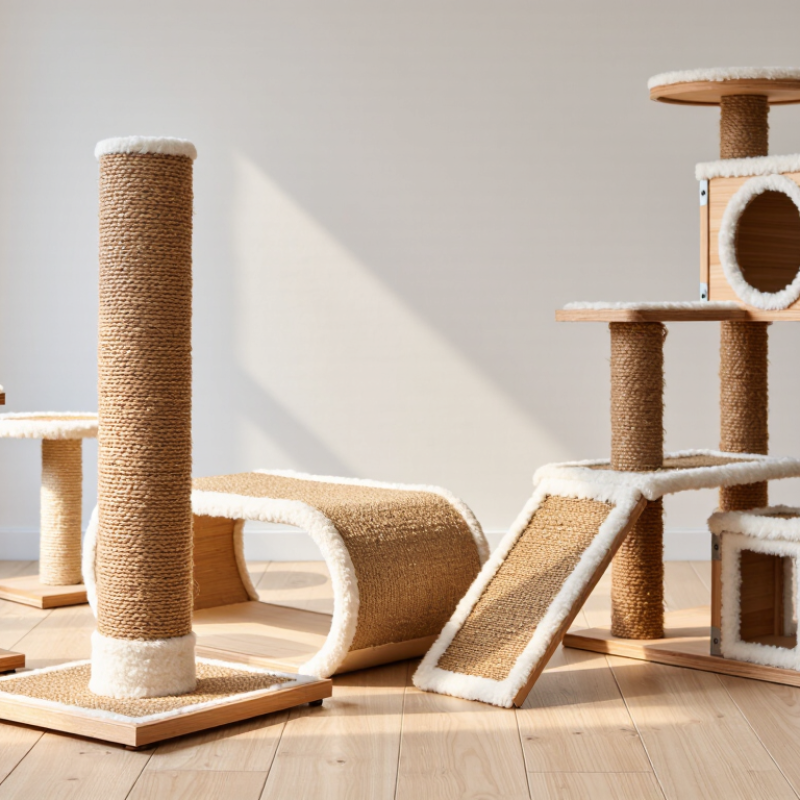
Wholesale buyers should compare scratching posts by structure, surface, stability, and replacement potential. Vertical posts suit cats that stretch fully while scratching. Horizontal boards work better for cats that scratch floors or carpets. Some cats prefer angled designs, but preference can vary within the same household.

Sisal-wrapped posts offer strong resistance and create visible scratching marks over time. Cardboard scratchers feel softer and often attract cats quickly through their textured layers. Carpet surfaces blend with home interiors, yet they may confuse cats about which household fabrics are acceptable. Solid wood frames improve stability, especially for larger cats. However, heavier products can increase shipping costs and warehouse handling effort. In practical wholesale testing, a broad base often matters more than extra height. No single type wins every market.

How to Compare Materials, Designs, Sizes, and Durability

Wholesale buyers should compare scratching posts by construction, not appearance alone. The APPA 2023–2024 National Pet Owners Survey estimates 46.5 million U.S. households own cats. That large buyer base increases demand for reliable, space-efficient products.

Sisal offers firm resistance and visible wear patterns. It also supports repeated vertical scratching. Cardboard feels softer and costs less, but it usually creates more debris. Natural wood can improve stability, though surface splinters require strict quality checks. Choose a base wider than the post height suggests. A tall post with a narrow base may tip during energetic use. Stability matters more than decorative shape.

Size should match the cat’s full stretching length. Multi-level designs add climbing value, but they increase packing volume and shipping costs. A 2024 Packaged Facts pet products analysis highlights convenience and durability as important purchase considerations. My own sampling experience supports this, although one weakness remains: short showroom tests cannot predict six months of scratching. Request compression, pull, and tipping tests from suppliers.

Tips: Check rope density, base thickness, edge finishing, and replacement-part availability. Ask for carton measurements before confirming the order. Compare landed cost, not unit price. Keep a small batch for repeated testing. No material wins every test.

2026 Best Cat Scratching Post Types for Wholesale Buyers - How to Compare Materials, Designs, Sizes, and Durability

Scratching Post Type Primary Materials Common Design Typical Wholesale Size Typical Weight Range Expected Service Life* Durability Factors Wholesale Advantages Main Limitations Best Use Case
Corrugated Cardboard Scratcher Layered corrugated paperboard; water-based or paper wrapping Flat pads, lounge beds, ramps, or replaceable inserts 40–60 × 20–35 × 4–10 cm 0.4–1.8 kg 1–6 months, depending on use Flute density, paper grammage, adhesive quality, and reversible construction Low freight cost, easy flat packing, low retail price, and recyclable paper content Generates paper debris; absorbs moisture; wears faster under heavy use Entry-level assortments, promotions, and high-volume replacement sales
Sisal Rope-Wrapped Post Natural sisal rope, paper tube or solid wood core, plywood or MDF base Vertical cylindrical post with a square or round weighted base 45–75 cm high; 8–12 cm post diameter 1.5–5.0 kg 6–18 months, depending on rope thickness and cat activity Rope diameter, tight winding, abrasion resistance, base weight, and joint strength Broad consumer appeal, efficient vertical scratching, and good balance of cost and life Rope can loosen or fray; unstable bases may tip during vigorous scratching Core everyday product for general pet retail and online channels
Sisal Fabric Scratching Board Woven sisal fabric, plywood or MDF panel, fabric or paper edging Wall-mounted panel, flat board, or angled scratcher 40–70 × 20–30 × 1.5–4 cm 0.8–2.5 kg 8–24 months with secure installation Fabric weave density, backing adhesion, mounting hardware, and panel stiffness Space-efficient, replaceable-panel potential, and suitable for vertical scratching behavior Requires reliable mounting; exposed edges may need additional binding Small homes, wall displays, and premium space-saving ranges
Carpet-Covered Scratching Post Loop or cut-pile carpet, engineered wood, paper tube, and staples or adhesive Vertical post, ramp, or multi-level cat-tree component 40–90 cm high; 8–14 cm post diameter 1.5–6.0 kg 4–12 months in the main scratching zone Carpet pile density, seam finishing, adhesive coverage, and resistance to pulled loops Soft appearance, coordinated furniture styling, and broad color assortment potential Can retain hair and odors; loose loops may catch claws; wear is less visually uniform Furniture-style collections and coordinated cat-tree programs
Solid Wood and Sisal Post Solid wood or thick plywood, sisal rope or fabric, water-based finish Heavy-duty vertical post with wide base or integrated platform 60–100 cm high; 10–16 cm post diameter 4.0–12.0 kg 12–36 months when properly assembled Wood thickness, base footprint, fastener quality, rope replacement design, and joint rigidity Excellent stability, premium positioning, and suitability for large or active cats Higher material and freight cost; heavier cartons; requires careful moisture control Premium lines, multi-cat households, and durable-product positioning
Wall-Mounted Scratching System Sisal fabric or rope, plywood or laminated board, metal brackets and fasteners Vertical modular panel, corner guard, or replaceable wall pad 40–80 × 15–30 × 2–8 cm per module 1.0–4.5 kg per module 12–30 months with correct installation Bracket load rating, screw quality, wall compatibility, panel rigidity, and replaceable surfaces Minimal floor footprint, modular upselling, and reduced tipping risk after installation Installation is customer-dependent; unsuitable for weak walls or rental restrictions Urban homes, modular merchandising, and wall-protection solutions
Multi-Level Scratching Tower Sisal rope, carpet or plush fabric, engineered wood, paper tubes, and metal hardware Multiple posts, platforms, hideaways, ramps, and resting areas 90–180 cm high; 50–80 cm base width 10.0–35.0 kg 12–30 months; high-wear areas may need earlier replacement Base stability, anti-tip hardware, platform thickness, joint design, and surface replacement options High average order value, strong enrichment appeal, and multiple scratching angles Large packaging, higher damage risk in transit, more assembly steps, and greater quality-control needs Large homes, multi-cat households, and premium online assortments
Wholesale comparison notes: Service-life figures are practical planning ranges rather than guarantees. Actual durability varies with cat size, clawing frequency, humidity, assembly quality, and surface replacement. Before placing a bulk order, verify base stability, tipping resistance, exposed staples or fasteners, rope adhesion, edge finishing, odor, carton drop performance, and applicable pet-product safety requirements.
Best Cost Efficiency Corrugated cardboard and standard sisal posts
Best Stability Solid wood and sisal designs
Best for Small Spaces Wall-mounted systems and sisal boards
Best Premium Potential Multi-level towers and heavy-duty posts

Which Scratching Post Types Suit Different Cats and Retail Markets

For wholesale buyers, scratching posts should match cat behavior, housing, and shopper budgets. The APPA 2023–2024 National Pet Owners Survey reports that 39% of U.S. households own cats. That broad base includes energetic kittens, senior cats, and cautious indoor animals.

Vertical sisal posts suit cats that stretch fully and scratch after waking. Choose stable bases, dense wrapping, and heights above 70 centimeters. Horizontal cardboard boards work well for low-energy cats and small apartments. They are lightweight, affordable, and easy to display near litter products. Wall-mounted scratchers save floor space, but retailers should check mounting instructions carefully. Safety concerns can increase returns.

Premium urban stores may prefer modular towers with platforms, hideaways, and replaceable panels. Value-focused retailers often need compact boards with clear price points. FEDIAF’s 2024 report estimates 108.3 million cats live in Europe, showing why regional assortment matters. European apartments may favor narrow vertical designs, while larger homes can support multi-level structures.

Do not overstock tall towers. They look impressive, but some cats ignore them. A practical wholesale test could compare three formats across several stores. Track sell-through, damage, customer comments, and repeat orders. Material claims also need verification; “natural” does not always mean durable. The best range may be less elegant, but more usable.

How Wholesale Buyers Can Select, Source, and Stock the Right Products

Wholesale buyers should begin with demand, not attractive shapes. APPA’s 2023–2024 National Pet Owners Survey reports 46.5 million U.S. households own cats. FEDIAF’s 2024 European Pet Food Facts estimates 108 million European cats. These figures support broad demand, but regional habits still differ.

Stock three practical types. Sisal posts suit daily vertical scratching and need a stable, weighted base. Corrugated cardboard models offer lower prices and easy shelf rotation. Wall-mounted or horizontal boards help smaller homes and older cats. I would request samples before placing a large order. Check the rope tension, board density, odor, base balance, and edge finishing by hand.

Wholesale sourcing also needs measurable specifications. Ask for carton dimensions, unit weight, material details, replacement-part availability, and packaging photos. The American Pet Products Association reported U.S. pet industry spending reached 147 billion dollars in 2023. That spending does not guarantee every accessory will sell. A high retail price may create slow inventory, even when the product looks premium. I once underestimated storage space for bulky bases; the margin looked good, but handling costs weakened it. Buyers should test small quantities across price levels, track damage and repeat orders, then adjust the mix. Avoid vague claims such as “indestructible.” Clear product descriptions build stronger retailer trust.