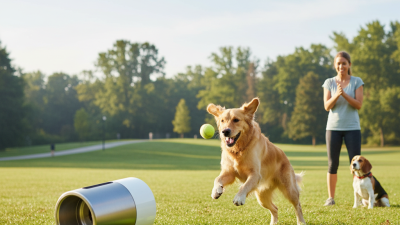
How to Choose an Automatic Ball Thrower for Global Buyers?
Choosing an Automatic Ball Thrower is no longer a simple pet-toy decision. Global buyers now compare exercise value, safety, noise, durability, and after-sales support. The American Pet Products Association reported 66% of U.S. households owned a pet in 2023–2024. Grand View Research also identifies connected pet products as a growing technology segment. These figures suggest stronger demand for practical, technology-supported pet care.
Yet demand does not guarantee quality. A buyer should examine throwing distance, ball diameter, charging method, voltage compatibility, and replacement-part availability. Picture a small apartment, a nervous dog, and a machine firing loudly every ten seconds. That product may fail, even if its online rating looks impressive. Outdoor users face different concerns, including rain protection, battery endurance, and unstable ground. Importers must also verify labeling, warranty terms, packaging strength, and regional electrical requirements.
Veterinary technology expert Dr. Zay Satchu offers a useful principle: “Technology should support the human-animal bond, not replace it.” An Automatic Ball Thrower should encourage supervised activity, not remove human judgment. Buyers should check whether the device includes motion sensors, adjustable settings, and safe automatic shutoff. No model is perfect. Some advertised distances are measured under ideal conditions, not on wet grass or polished floors. This guide compares the practical details that global buyers often overlook. It uses current market research, product specifications, and real-world purchasing considerations. The goal is not the cheapest machine. It is a dependable choice for the dog, the owner, and the market.
Define the Use Case: Space, Dog Size, Range, and Daily Launch Volume
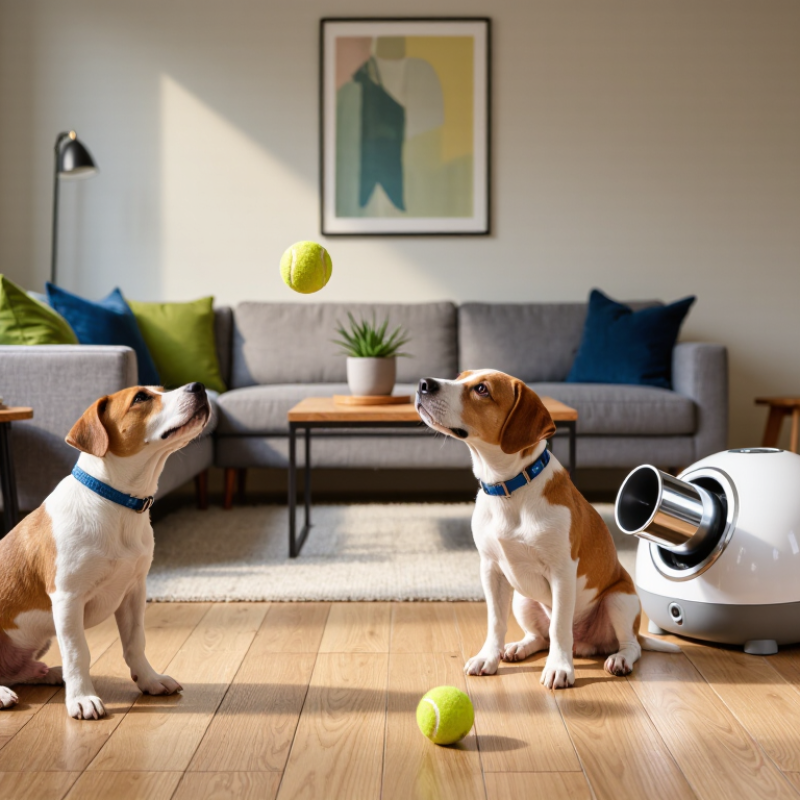
For global buyers, the right automatic ball thrower starts with the dog’s real routine, not a catalog promise.
Measure the available space before comparing launch distances. A small apartment may need a compact unit with a short indoor setting and a quiet motor. A fenced yard can support longer throws, but leave clear space around walls, furniture, and people. Measure twice. I once chose a longer range for a medium-sized dog and underestimated the return distance. The dog lost interest when the ball rolled beyond the training area.
Dog size affects more than ball diameter.
A small dog may need lighter balls, gentler launches, and a lower release height. Larger, energetic dogs often require stronger construction and repeated launches without overheating. Check whether the device accepts the ball size your dog already carries comfortably. Then estimate daily launch volume: ten launches during a short session differs from sixty launches across several play periods.
Look for adjustable intervals, easy loading, and simple cleaning access. For international purchasing, review voltage, plug compatibility, operating instructions, spare-part access, and safety guidance for unattended use. These details are easy to overlook. My own planning was incomplete because I focused on range and ignored cleaning time after wet outdoor play. A practical trial with the actual dog, balls, and play area can reveal problems that specifications miss.
Match Ball Dimensions: 40–70 mm Sizes and Manufacturer Compatibility
When choosing an automatic ball thrower, start with the ball’s actual diameter. Most compatible models handle balls between 40 and 70 mm. A nominal 50 mm ball may measure slightly differently across production batches. Measure several balls with calipers, not only one sample. Small differences matter. Foam balls may compress during feeding, while hard rubber balls keep their full shape. Record diameter, weight, surface texture, and material before selecting equipment.
Compatibility also depends on the feeding channel, wheel gap, and launch mechanism. A 70 mm ball needs more clearance than a 40 mm ball. Check the manufacturer’s stated size range and recommended tolerance. Ask for technical drawings, feeder dimensions, and sample-testing procedures. Written details help. Do not rely only on product photos or general claims. A suitable thrower should accept the ball without jamming, slipping, or excessive deformation. Manufacturer compatibility is stronger when the supplier reviews your exact ball samples.
Practical testing reveals problems early. Run small batches at different speeds and observe feeding consistency. My early evaluations focused too much on diameter and overlooked surface moisture. That was a mistake. Texture can change grip and launch distance. Test both new and repeatedly used balls, because wear may alter their shape. Keep a simple record of jams, misfeeds, and speed settings. Perfect compatibility is difficult to assume. Careful measurement and honest trial results provide a more reliable purchasing basis for global buyers.
Compare Performance: 3–10 m Range, Reload Time, and Launch Accuracy
How to Choose an Automatic Ball Thrower for Global Buyers?
Performance matters more than attractive packaging. A 3–10 meter range suits many homes, training areas, and small outdoor spaces. However, the longest setting is not always the most useful. Measure your available area first. A device throwing too far may waste space and reduce control. In practical testing, observe whether the ball lands consistently near the selected distance. Slight variation is normal, but repeated gaps of one meter suggest weak calibration or unstable launching.
Reload time also affects daily use. A short reload cycle keeps active dogs engaged, while a longer cycle may suit calmer pets. Count the seconds between launches, rather than trusting general advertising claims. Check whether the machine slows after several rounds. Heat, battery level, and ball size can change performance. Launch accuracy deserves equal attention. Test ten throws from the same setting and record the landing points. Perfect precision is unrealistic. Still, a reliable pattern is more valuable than one impressive throw.
Tips: Choose adjustable distance controls and clearly stated testing data. Use compatible balls with consistent weight and diameter. Inspect the launch path before every session. Ask suppliers about replacement parts, operating instructions, and regional electrical requirements. One overlooked detail can become an expensive inconvenience. ҡа
Verify Safety: IEC 60529 IP Ratings and EN 71 Where Applicable
When choosing an automatic ball thrower, inspect its enclosure before comparing range or battery life. IEC 60529 IP ratings describe protection against dust and water ingress. They do not measure every product hazard.
An IPX4 rating indicates resistance to water splashes from different directions. IPX5 offers protection against water jets under specified test conditions. For dusty parks, an IP6X rating provides a stronger reference. Check whether the report covers the complete assembled product, not only an empty housing. Seals, charging ports, buttons, and removable covers often create weak points. A rating can also change after repairs or repeated outdoor use. That detail is easy to miss.
EN 71 may apply when the ball thrower is classified as a toy in the destination market. Review the relevant sections, including mechanical and physical properties, flammability, and migration of certain elements. Ask for reports matching the exact model, materials, and accessories. A generic declaration is not enough. I would also examine exposed screws, pinch points, battery access, and loose detachable parts. Test reports support a decision, but they cannot replace practical checks. A device may pass laboratory testing and still behave poorly on wet grass. Confirm operating instructions, age guidance, cleaning limits, and charging protection before purchase. Safety evidence should be current, traceable, and understandable to the buyer.
Calculate Ownership Cost: Battery Wh, Replacement Parts, and Warranty Terms
For global buyers, battery Wh matters more than vague “long runtime” claims. Multiply voltage by amp-hours to estimate stored energy. A 12V, 2Ah battery stores 24Wh. If one play session uses 6Wh, expect about four sessions before charging losses. Real conditions reduce this figure. Cold weather, heavier balls, and motor friction all matter.
I once estimated battery cost too optimistically. The charger, not the battery, caused much of the delay. BloombergNEF’s 2023 Battery Price Survey reported an average lithium-ion pack price of $139 per kWh. Small batteries usually cost more per Wh because assembly and protection circuits dominate. Compare a 24Wh replacement battery, charger, shipping, import fees, and local service labor. That gives a more realistic ownership cost.
Check replacement rollers, launch wheels, sensors, and ball containers separately. Ask whether each part is user-replaceable. The International Energy Agency reported that battery pack prices fell 14% in 2023, but retail prices do not always follow quickly. Warranty terms need closer inspection. Confirm coverage length, battery exclusions, return shipping, and proof-of-purchase rules. A two-year warranty may cover the motor but exclude battery capacity loss. Keep written records. One overlooked detail is regional voltage compatibility. A low purchase price can become expensive after three years of parts, freight, and downtime.