What Are the Top Rated Dog Chew Toys?
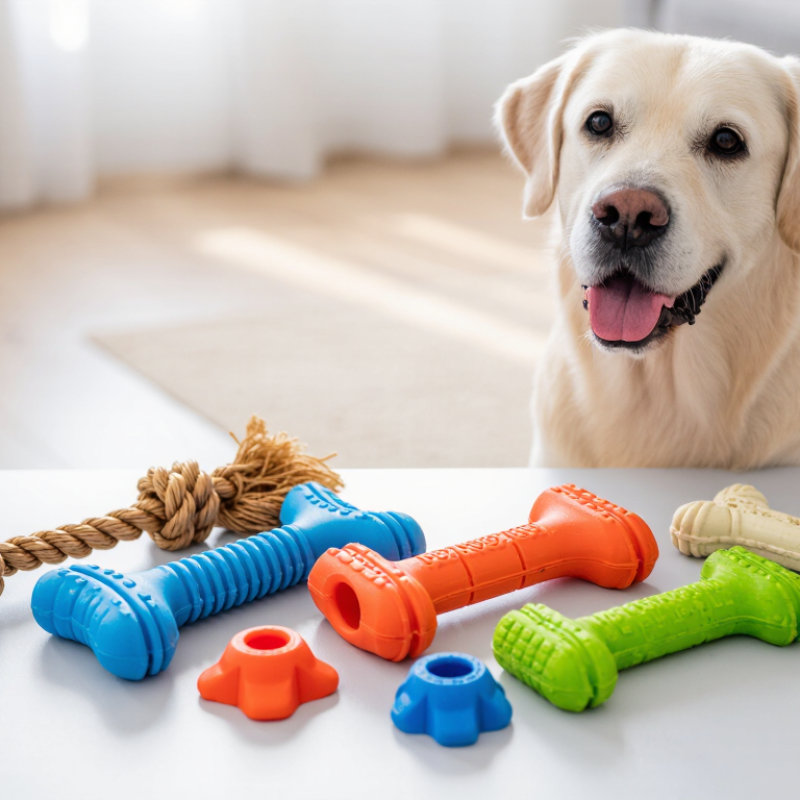
Choosing Top Rated Dog Chew Toys is not just about finding the product with the most stars. A toy that suits a gentle chewer may not last through a determined dog’s daily gnawing. Size, chewing style, age, and play habits all matter. Look closely at the product’s recommended dog size and use instructions. A rubber toy’s grooves, a textured surface, or a hollow center can change how a dog grips and enjoys it. Small details count.
Ratings can offer a useful starting point, but they are not a guarantee of fit or durability. Read reviews for repeated observations, such as cracking, hard-to-clean spaces, or a toy becoming damaged sooner than expected. Check the toy before and after play, and remove it if pieces loosen or break. Supervision is especially important for dogs that chew intensely. No chew toy is indestructible. If you are unsure about a material, size, or your dog’s chewing habits, ask your veterinarian for guidance. Even careful research has limits: dogs can surprise you, and a toy that worked last month may not suit them now. This guide compares practical features so you can make a more informed choice for your dog.
How Expert Ratings Compare Dog Chews by Safety, Durability, and Fit
What Are the Top Rated Dog Chew Toys?
Expert ratings are most useful when they explain how a chew performed, not just assign a score. Safety comes first: reviewers should consider material quality, breakage, and whether small pieces could come loose. A toy that looks sturdy may still crack under a determined chewer. Check it often, and remove it if it becomes damaged.
Durability matters, but tougher is not always better. Very hard chews may stress teeth, so ask your veterinarian what suits your dog. Fit matters, too. The chew should be large enough to reduce the chance of swallowing, yet manageable for your dog to hold. A small dog with a gentle bite has different needs from a large, persistent chewer. One limitation is easy to miss: ratings cannot predict every dog’s habits. Even a highly rated chew needs supervision.
Tips: Watch how your dog uses a new chew for the first few sessions. Look for sharp edges, cracks, or loose pieces. If your dog gulps chews or has dental problems, seek veterinary guidance before choosing one. A simple size check helps, but it is not a guarantee.
Compare Rubber, Nylon, and Edible Chews by Material and Purpose
Choosing a dog chew starts with your dog’s chewing style, not a popularity ranking. Rubber toys often suit steady chewers who enjoy squeezing and carrying their toys. A flexible surface can be gentler on teeth than very hard materials. Look for a size your dog cannot swallow, and check for cracks or missing pieces. No toy lasts forever.
Nylon chews are usually firmer and may hold a dog’s interest longer. They can work for determined chewers, but excessive hardness is a concern: if you cannot press a fingernail into the surface, consider a softer option. Watch for sharp edges as the chew wears down. I’ve found that “long-lasting” is not always the same as “right for every dog.”
Edible chews offer a different purpose: they provide a chew session that is gradually consumed. Choose a size suited to your dog, supervise closely, and remove small remnants that could be swallowed whole. Ingredients and calories vary, so check the package, especially if your dog has dietary sensitivities. Some dogs gulp rather than chew. That changes the risk. Material, size, and your dog’s habits matter more than a simple top-rated label.
What Are the Top Rated Dog Chew Toys?
A material-based comparison of rubber, nylon, and edible chews by common use case.
Scores are illustrative material-level ratings from 1 (low) to 5 (high), not laboratory test results; individual products vary. Rubber and nylon are generally reusable and easy to clean, while edible chews are designed to be consumed. Choose an appropriate size and chew strength, supervise your dog, and remove damaged chews.
Check Dental Claims Against VOHC Trials: 20% Plaque or Calculus Reduction
What Are the Top Rated Dog Chew Toys?
A chew toy’s dental claim needs more than a bright package and a percentage. Look for a controlled trial that measures plaque or calculus before and after use. If a claim says “20% reduction,” check what fell by 20%, compared with what, and over how many weeks. Plaque and calculus are different outcomes. One result does not prove both.
VOHC trial information can help you assess whether a dental claim has meaningful evidence behind it. Check whether the product appears on the VOHC accepted-products list, and whether the evidence concerns plaque, calculus, or both. Study details matter: dogs’ sizes, sample numbers, feeding routine, and comparison group can all shape results. Small print matters. A percentage without context is easy to misread, and I still find that part surprisingly easy to overlook.
A well-supported chew should also suit the individual dog. Watch how your dog bites and inspect the toy for cracks or sharp edges. Very hard chews may damage teeth, so ask a veterinarian about safer options, especially if your dog has dental problems. Supervise chewing. No toy replaces brushing or a dental checkup, even when a trial reports a measurable reduction.
Inspect Chews Regularly and Remove Any That Crack or Break apart
A dog chew toy can look sound from across the room and still have a weak spot. Inspect it before and after chewing, especially if your dog bites hard or works on one area repeatedly. Run your fingers over the surface and check seams, edges, and hollow sections. Look for hairline cracks, deep grooves, loose pieces, or chunks that have started to peel away. Small cracks matter. A damaged toy may break further during chewing, creating pieces your dog could swallow or choke on.
Remove any chew that cracks, splits, or begins to break apart; do not wait for it to become unusable. If a piece has already come loose, take the toy away and check the area for other fragments. Choose a replacement suited to your dog’s size and chewing style, and follow the toy’s care instructions. There is no need to panic over every tooth mark, but a fresh split deserves attention. It is easy to get distracted and skip an inspection, especially when a dog settles quietly with a chew. A quick check takes little time, and doing it consistently is safer than relying on appearance alone.